Ethylene Glycol (MEG)
A high-purity commodity diol for polyester and PET synthesis, antifreeze and heat transfer fluids.
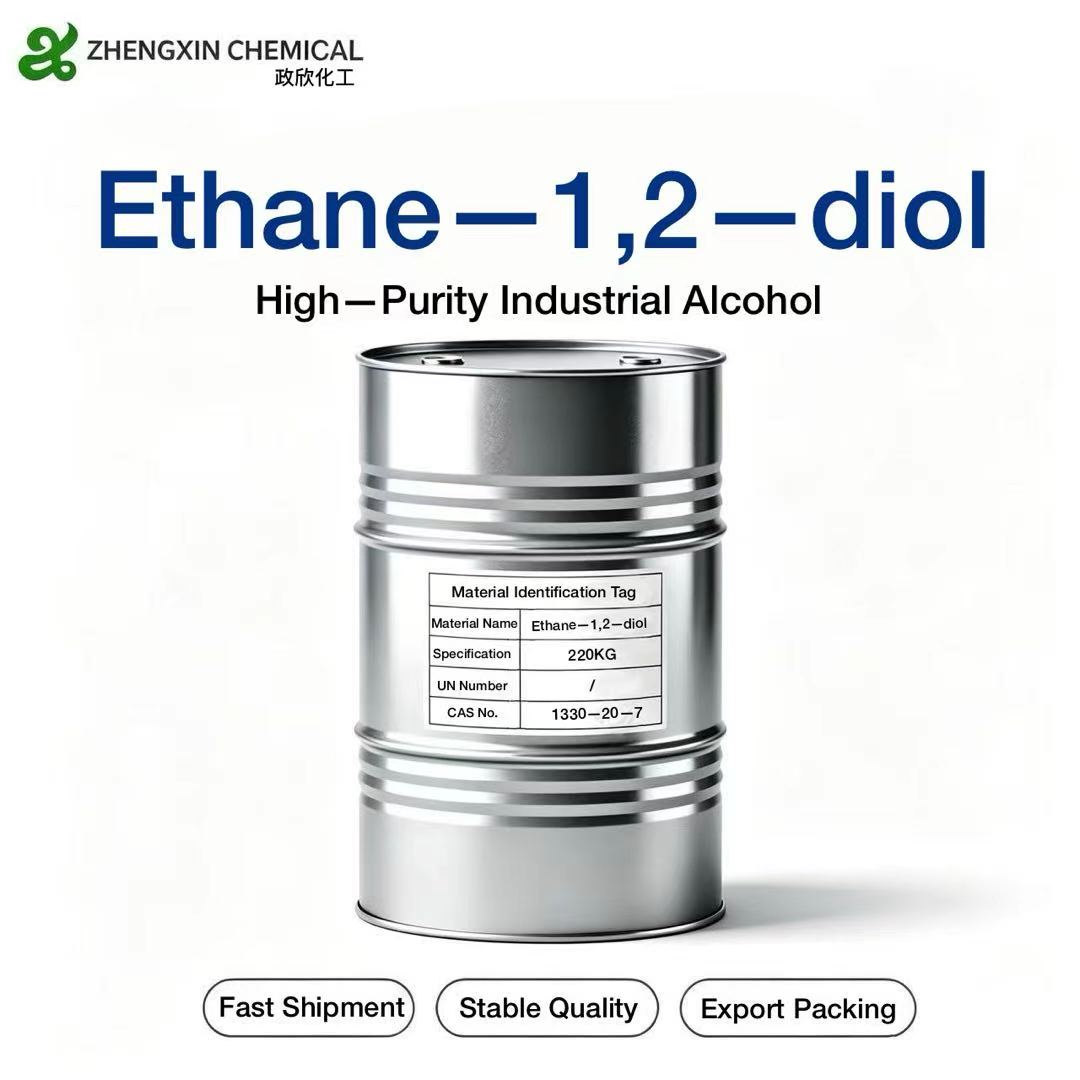
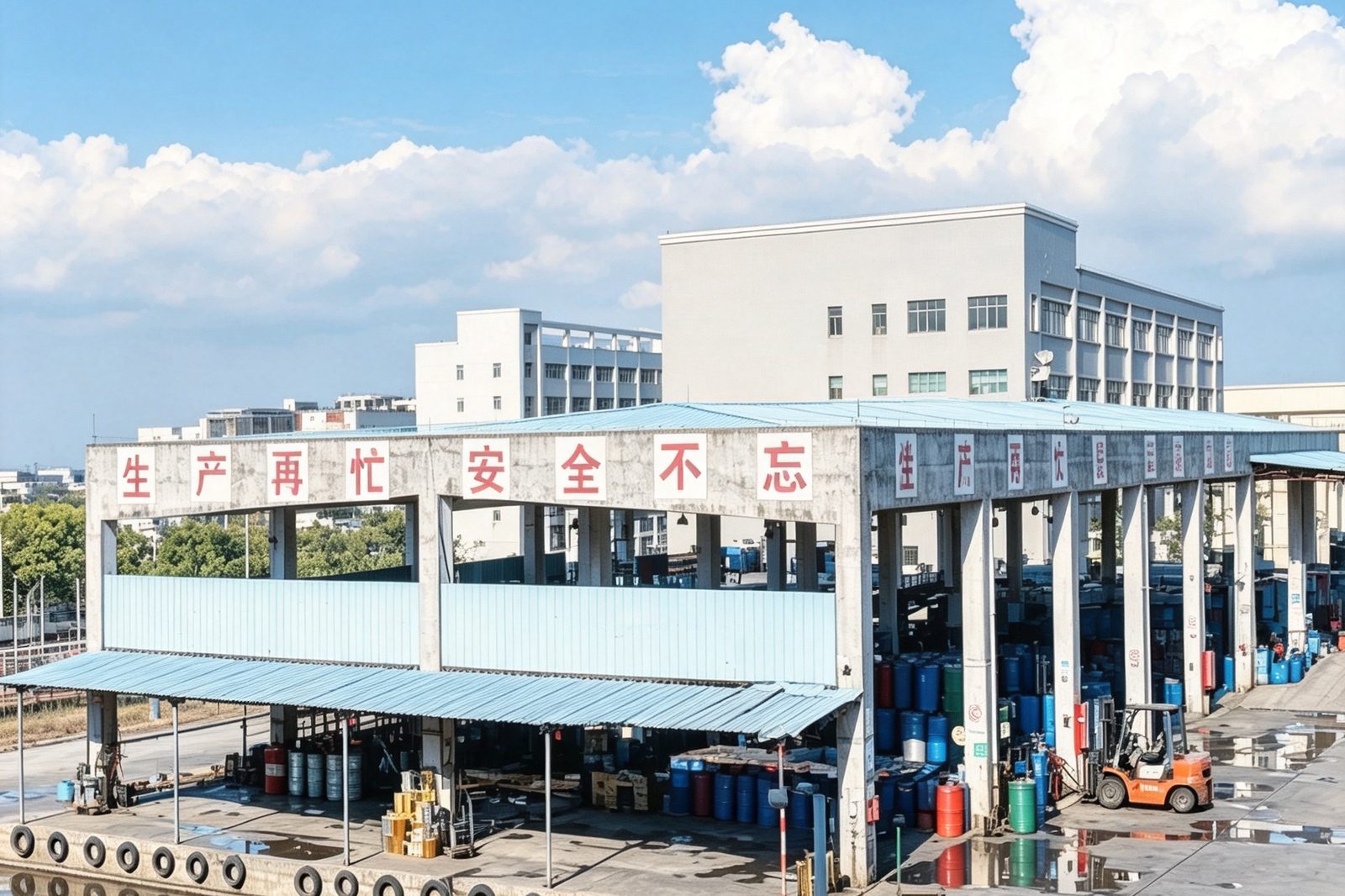
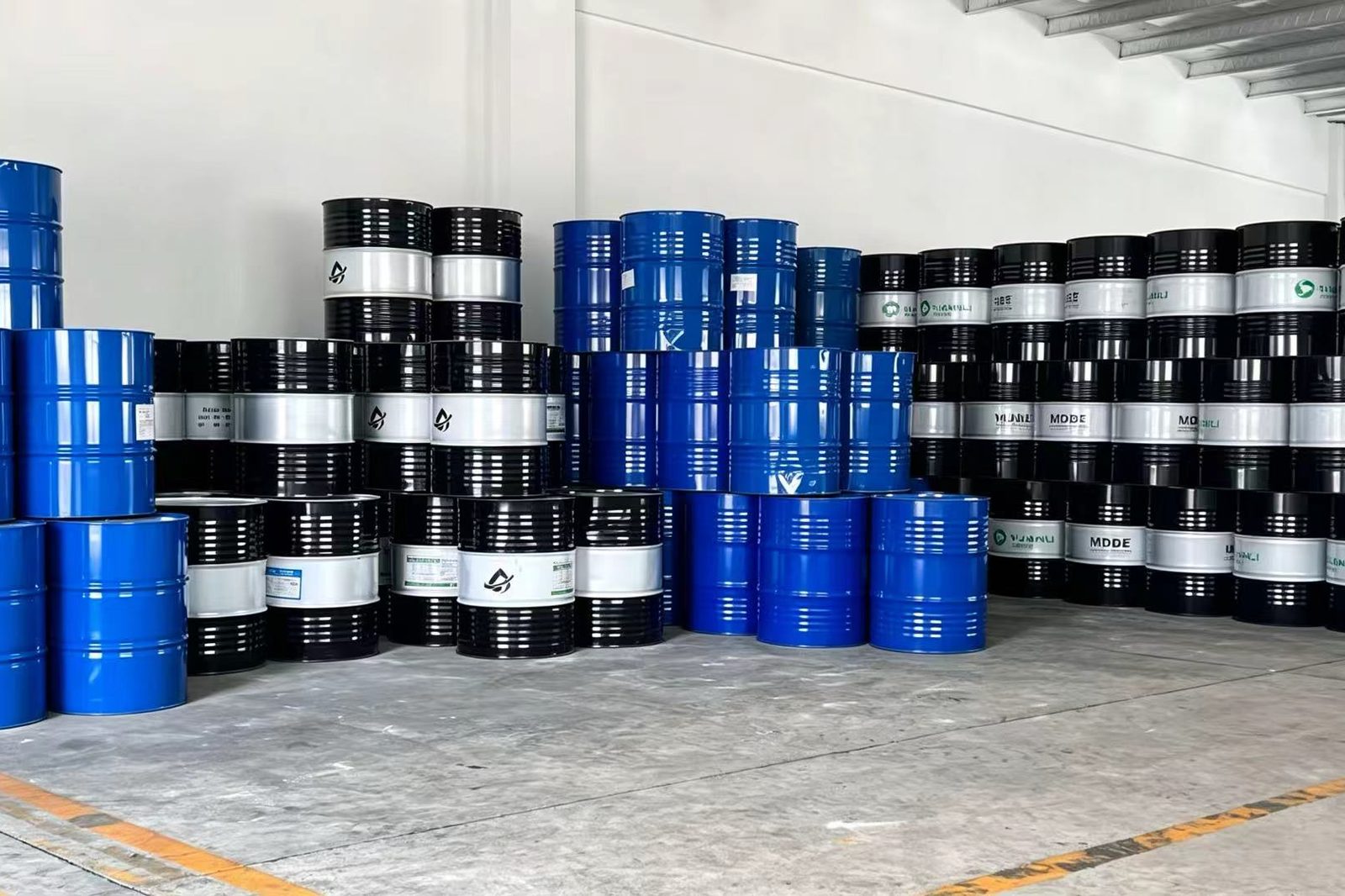
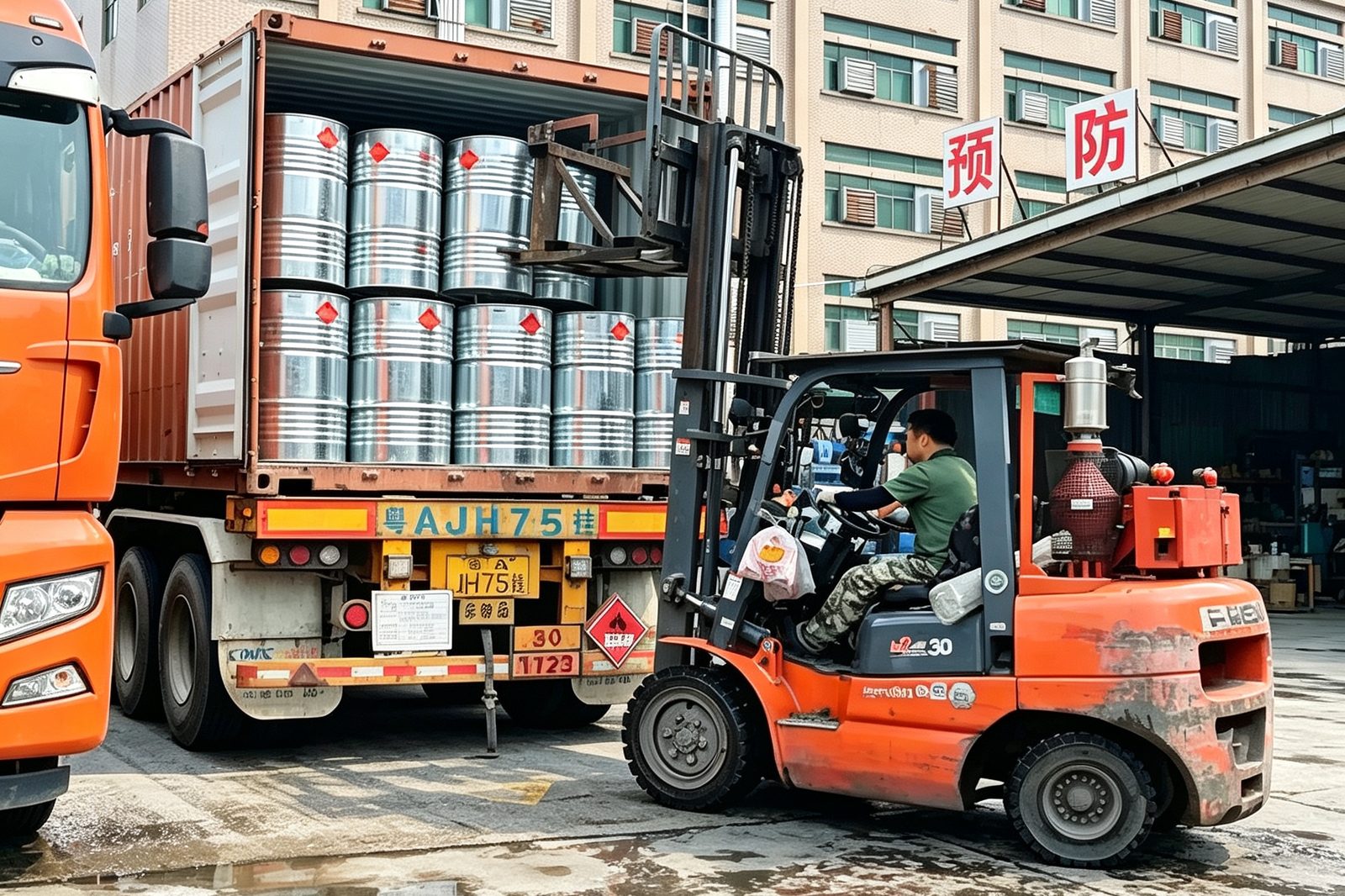
Product photo plus packaging, storage and loading conditions at our Dongguan facility.
At a Glance
| CAS No. | 107-21-1 |
| Chemical Name | Ethylene glycol (MEG, monoethylene glycol, ethane-1,2-diol) |
| Molecular Formula | C2H6O2 |
| Purity | ≥99% |
| Origin | China |
| Packaging | 210 L steel drum (220 kg) / IBC / ISO tank / small drum |
| Lead Time | 15–20 working days after deposit |
Product Overview
Ethylene glycol is the most widely consumed basic alcohol in the chemical industry. It is produced continuously in large-scale ethylene oxidation trains and purified through multi-stage distillation that removes impurities and water, so purity stays consistently on specification with very little batch-to-batch variation — ideal for long, continuous polyester polymerisation lines. The product is a colourless, transparent, viscous liquid with a very strong affinity for water and is miscible with it in any ratio. Its low freezing point, high boiling point and good heat-transfer characteristics make it both a core monomer for polymers and a versatile solvent and humectant.
Looking at the market, global textile and apparel demand and the need for food and beverage bottle resin underpin baseline ethylene glycol consumption, while the expansion of new-energy vehicles continues to drive antifreeze and heat transfer fluid volume. Downstream glycol ether and polyethylene glycol capacity is also growing steadily, so demand has long-term resilience. The product is not a high-hazard chemical, which lowers storage and transport requirements: a conventional closed warehouse is sufficient, recovery and recycling processes are mature, and bulk purchasing offers a clear overall cost advantage.
Key Advantages
Stable Polymerisation Quality for High-End PET Production
Distillation removes impurities to very low levels, so polymerisation produces fewer by-products and the resulting polyester chip and fibre colour is uniform, with less filament breakage and no black specks in bottle resin — suited to demanding fibre and food packaging lines.
Outstanding Freezing Point Control, Antifreeze and Heat Transfer in One
Diluted with water the freezing point drops below -40 °C, and thermal conductivity is excellent, so one product covers vehicle cooling and closed-loop plant heat exchange for both hot and cold duty.
Strong Hydrophilic Moisture Retention, Wide Formulation Fit
Good hygroscopicity lets formulators control evaporation rate in coatings and personal care systems, preventing dry-out of the film or cracking of the product, with no separation on blending and high tolerance during formulation trials.
Essential Value-Chain Raw Material with Long-Term Stable Supply
Large integrated petrochemical trains run continuously and inventory can be adjusted between peak and off seasons, so long-term fixed-price supply contracts can be signed against raw material price swings.
Applications
Ethylene glycol serves six distinct industrial segments: polyester and PET, automotive antifreeze, industrial heat transfer and cooling fluids, coatings and inks additives, fine chemical synthesis, and natural gas dehydration.
- Polyester and PET synthesis — the largest global outlet, feeding polyester filament and staple fibre, food and beverage PET bottles, packaging film and engineering polyester chip polymerisation.
- Automotive and construction machinery antifreeze — the base material for engine cooling systems, combining freeze protection, boil-over protection and metal corrosion inhibition for passenger cars, heavy trucks and construction equipment year round.
- Industrial closed-loop coolants — a circulating heat transfer medium for chemical plant, central air conditioning and energy storage temperature control, stable across hot and cold duty with lower corrosion losses on equipment.
- Coatings and inks additives — a moisture-retaining, slow-drying aid for alkyd paints and water-based inks that improves film levelling and prevents rapid skinning or blanching during spraying.
Technical Specifications
| Appearance | Colourless transparent liquid |
| Purity | ≥99% |
| Molecular Formula | C2H6O2 |
| CAS No. | 107-21-1 |
| EINECS No. | 203-473-3 |
| Relative Density (water = 1) | 1.113–1.115 |
| Flash Point | 111 °C (closed cup) |
| Boiling Point | 197.3 °C |
| Hazard Classification | Not classified as dangerous goods |
| Stability | Chemically stable under sealed ambient storage — resistant to decomposition, oxidation and polymerisation |
| Solubility | Miscible with water, methanol, ethanol, acetone and other polar alcohol and ketone solvents |
| Storage | Store in a conventional closed, ventilated warehouse away from open flame and heat sources. Keep separate from oxidisers and strong alkalis and keep containers sealed to prevent moisture pick-up. |
Composition
| Component | Concentration | CAS No. |
|---|---|---|
| Ethylene glycol | ≥99% | 107-21-1 |
Transport & Compliance
| UN No. | None (non-hazardous) |
| Hazard Class | None (non-hazardous) |
| Packing Group | Standard packaging |
| HS Code | 2905310000 |
| Packaging | 220 kg per drum (210 L steel drum) |
UN and HS codes are shown for reference only — please confirm with us before shipment.
FAQ
What is your minimum order quantity?
Our MOQ is one 20GP container — up to 80 drums of 210 L.
What packaging do you offer?
Standard 210 L steel drums, plus IBC totes, ISO tank containers and small drums.
How many drums fit in a 20GP or 40GP, and can you consolidate?
Yes, we consolidate up to 5 product types in one shipment. A 20GP holds up to 80 drums (210 L); a 40GP holds around 130 drums (210 L).
What is the lead time?
15–20 working days after the deposit is received.
Which export documents do you provide?
COA, MSDS, commodity inspection certificate and dangerous goods packaging certificate. We can also assist with Certificate of Origin and other customs paperwork.
What payment terms do you accept?
T/T: 30% deposit, 70% balance against a copy of the Bill of Lading.
Technical Documents
MSDS and batch COA for Ethylene Glycol (MEG) are available on request. Tell us your quantity and destination port and we will send the documents with your quotation. Request documents →
Request a Quote for Ethylene Glycol (MEG)
Send the quantity and the destination port and we will reply with a price, a packaging suggestion and a realistic shipment date. All fields marked * are required.