1,2-Dichloroethane (EDC)
A chlorinated base chemical with dual value as the core VCM polymerisation intermediate and a strong chlorinated solvent, offering outstanding oil and resin solvency and high thermal cracking conversion for PVC monomer synthesis, precision metal degreasing, pharmaceutical extraction, rubber processing, agrochemical intermediates and ink stripping.
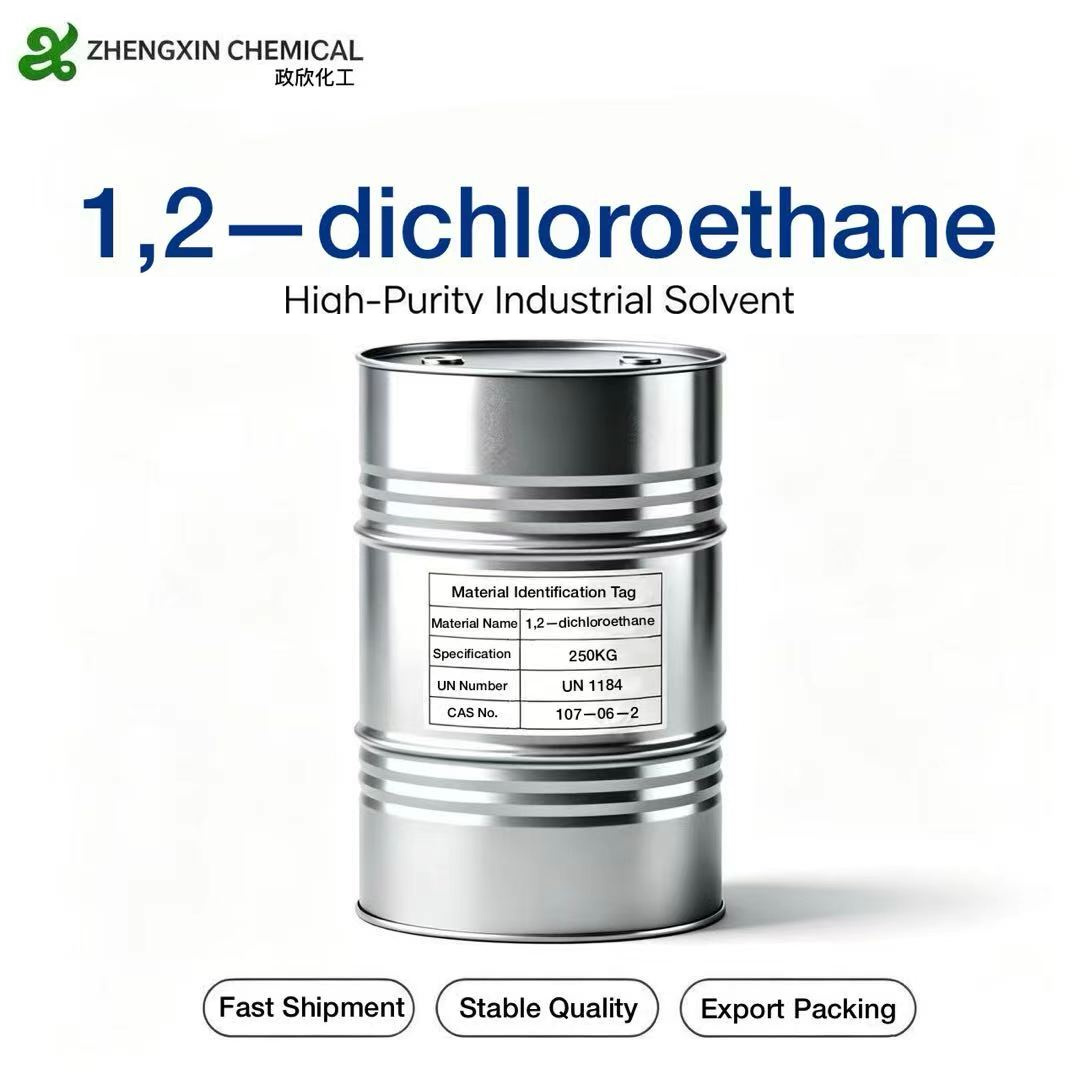
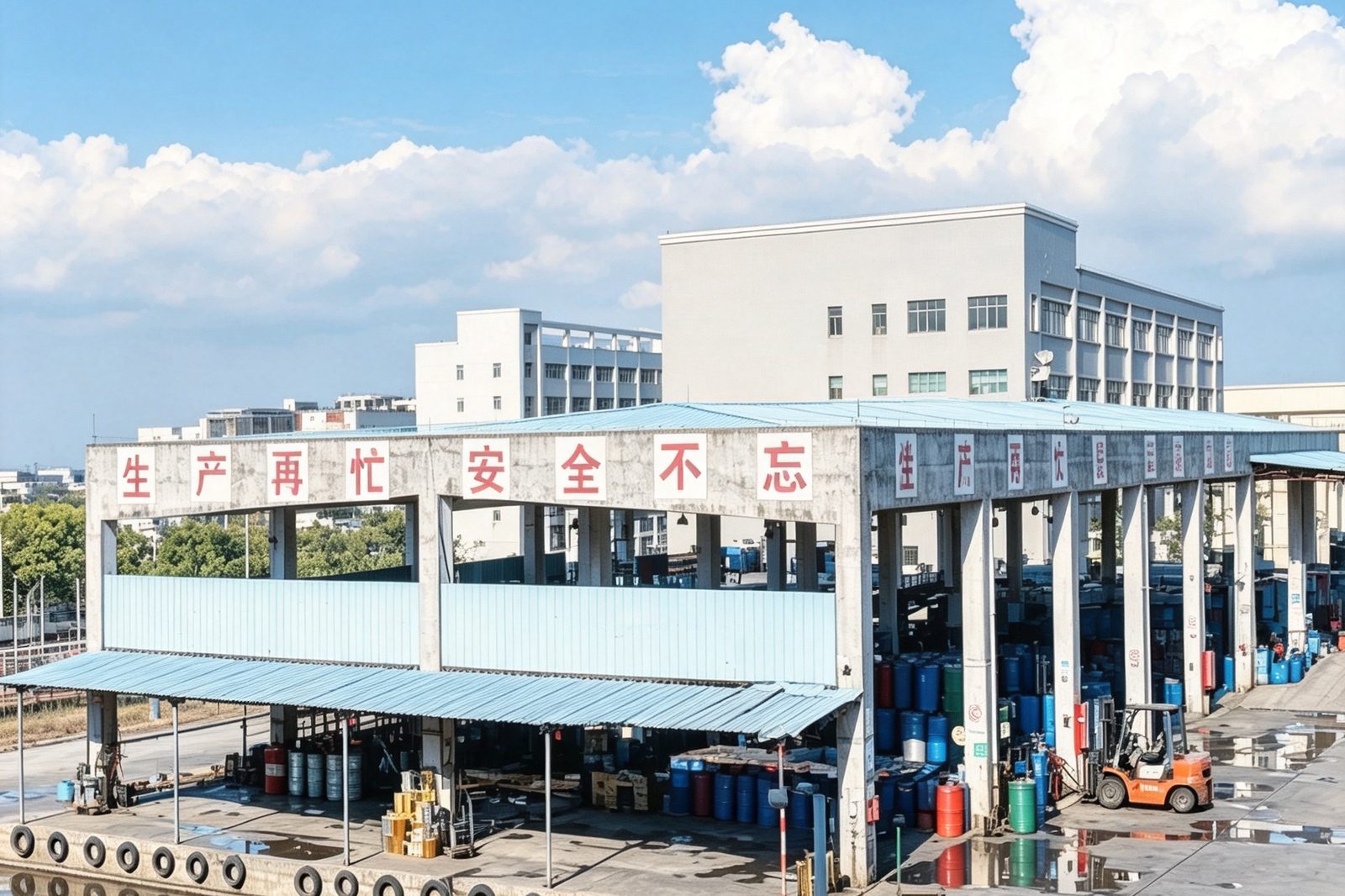
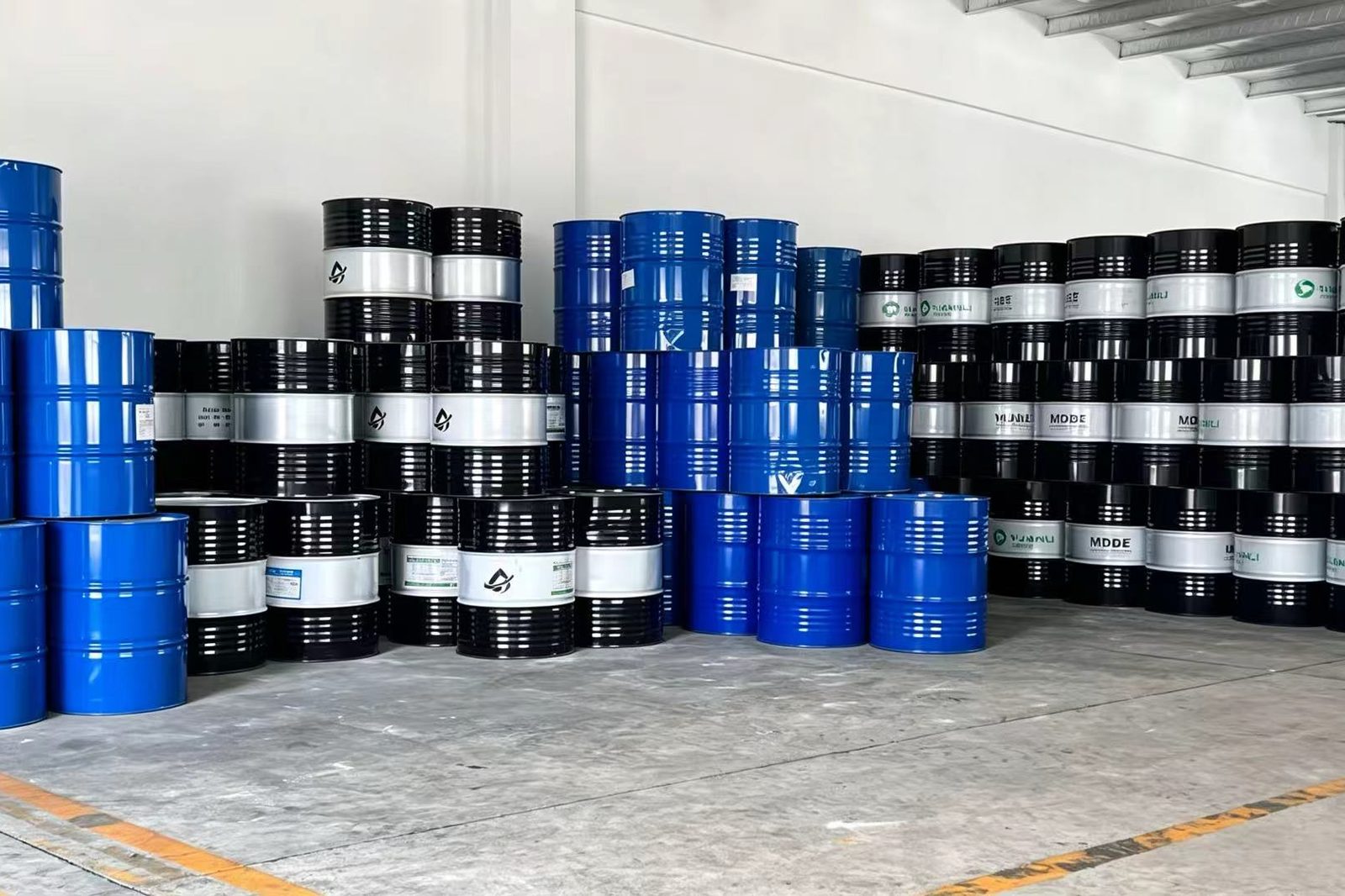
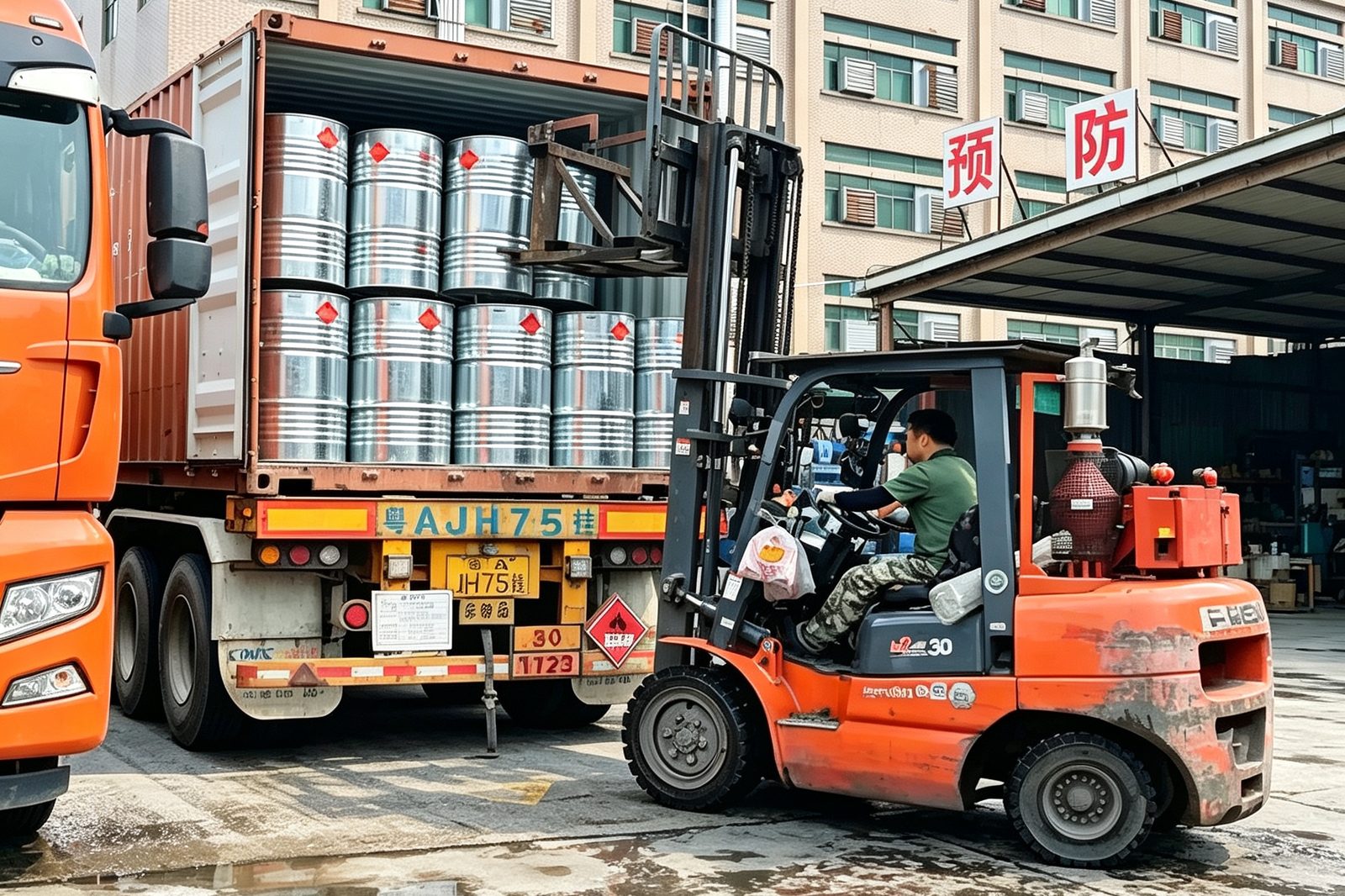
Product photo plus packaging, storage and loading conditions at our Dongguan facility.
At a Glance
| CAS No. | 107-06-2 |
| Chemical Name | 1,2-Dichloroethane (EDC, ethylene dichloride, sym-dichloroethane) |
| Molecular Formula | C2H4Cl2 |
| Purity | ≥99.5% |
| Origin | China |
| Packaging | 210 L steel drum (250 kg) / IBC / ISO tank / small drum |
| Lead Time | 15–20 working days after deposit |
Product Overview
1,2-Dichloroethane — also called EDC or sym-dichloroethane — is produced by catalytic chlorination of ethylene, with light and heavy fractions and free chlorine removed by multi-stage rectification, and is offered in both a high-purity polymerisation grade and a general-purpose solvent grade. Its two chlorine atoms give it high chemical reactivity, so high-temperature cracking to vinyl chloride monomer runs at a stable conversion. At the same time it dissolves rubber, resins and mineral oils extremely well, is slightly soluble in water, is infinitely miscible with most organic solvents, evaporates at a moderate rate and delivers outstanding degreasing and extraction efficiency.
Industry-wide, the global PVC building-materials, cable and packaging chain continues to expand, bringing EDC long-term rigid demand, with polymerisation-grade material accounting for most consumption; fine chemicals, electronics cleaning and agrochemical synthesis add steady incremental volume. Integrated ethylene complexes keep expanding worldwide while domestic supply remains stable and price volatility controllable. The product is a flammable, toxic hazardous chemical: warehousing must be fully sealed and isolated from open flame, strong acids and strong alkalis in a dedicated explosion-proof store, and spent solvent can be recovered by distillation for reuse, lowering long-term purchase cost.
Key Advantages
Polymerisation-Grade Purity with High Cracking Conversion
Impurities are tightly controlled, so thermal cracking to VCM produces fewer by-products and PVC resin purity improves markedly — suited to continuous operation on large polymerisation units.
Extreme Oil and Resin Solvency for Fast Degreasing and Extraction
It dissolves rubber, paraffin wax, synthetic resins and metal drawing oils far faster than ordinary alkanes, cutting cleaning and extraction cycle times substantially.
One Material, Two Roles: Feedstock and Solvent
It serves both as the core upstream raw material for PVC and as an industrial cleaning and pharmaceutical extraction medium, so one raw material covers several production lines.
Moderate Boiling Point for Easy Recovery and Low Reuse Cost
Its narrow volatilisation range means waste solvent can be purified by simple distillation and returned to the process, cutting hazardous-waste disposal costs.
Applications
1,2-Dichloroethane serves six differentiated industrial sectors: PVC vinyl chloride monomer synthesis, precision metal degreasing and cleaning, pharmaceutical active extraction, rubber de-oiling, agrochemical intermediate synthesis and ink adhesive-layer stripping.
- Core PVC resin feedstock — cracked at high temperature to make VCM for construction pipe, cable insulation, packaging film and automotive interior PVC.
- Hardware and electronics degreasing — fast cleaning of heavy rust-preventive oil and drawing grease from precision stampings, moulds and circuit boards, leaving parts clean with no oil residue.
- Pharmaceutical intermediate extraction — a separation and purification solvent for fat-soluble APIs and plant actives, with excellent impurity separation.
- Rubber regeneration — a dewaxing and de-oiling aid for scrap rubber and hose that improves the plasticising and moulding performance of reclaimed rubber.
Technical Specifications
| Appearance | Colourless to pale yellow transparent liquid with a chloroform-like odour |
| Purity | ≥99.5% |
| Molecular Formula | C2H4Cl2 |
| CAS No. | 107-06-2 |
| EINECS No. | 203-458-1 |
| Relative Density (water = 1) | 1.26 |
| Flash Point | 13 °C |
| Boiling Point | 83.5 °C |
| Hazard Classification | Class 3 flammable liquid |
| Stability | Stable when sealed at ambient temperature; decomposes to hydrogen chloride at high temperature, so never contact strong oxidisers, acids or alkalis |
| Solubility | Slightly soluble in water; miscible with ethanol, ether, chloroform and most common solvents |
| Storage | Store in a cool, sealed explosion-proof hazardous goods warehouse below 37 °C, fully sealed and protected from light. Keep segregated from oxidisers, acids, alkalis and food raw materials, with containment bunds and sand absorbent on site. |
Composition
| Component | Concentration | CAS No. |
|---|---|---|
| 1,2-Dichloroethane | ≥99.5% | 107-06-2 |
Transport & Compliance
| UN No. | UN1184 |
| Hazard Class | Class 3 flammable liquid |
| Packing Group | II |
| HS Code | 2903191010 |
| Packaging | 250 kg per drum (210 L steel drum) |
UN and HS codes are shown for reference only — please confirm with us before shipment.
FAQ
What is your minimum order quantity?
Our MOQ is one 20GP container — up to 80 drums of 210 L.
What packaging do you offer?
Standard 210 L steel drums, plus IBC totes, ISO tank containers and small drums.
How many drums fit in a 20GP or 40GP, and can you consolidate?
Yes, we consolidate up to 5 product types in one shipment. A 20GP holds up to 80 drums (210 L); a 40GP holds around 130 drums (210 L).
What is the lead time?
15–20 working days after the deposit is received.
Which export documents do you provide?
COA, MSDS, commodity inspection certificate and dangerous goods packaging certificate. We can also assist with Certificate of Origin and other customs paperwork.
What payment terms do you accept?
T/T: 30% deposit, 70% balance against a copy of the Bill of Lading.
Technical Documents
MSDS and batch COA for 1,2-Dichloroethane (EDC) are available on request. Tell us your quantity and destination port and we will send the documents with your quotation. Request documents →
Request a Quote for 1,2-Dichloroethane (EDC)
Send the quantity and the destination port and we will reply with a price, a packaging suggestion and a realistic shipment date. All fields marked * are required.