Dimethyl Carbonate for New Energy Materials: A Sourcing Guide
Demand for dimethyl carbonate is rising with lithium battery and electronics manufacturing, and buyers in those industries judge suppliers on purity, water content and consistency rather than price alone.
Dimethyl carbonate (DMC, CAS 616-38-6) is a colourless, transparent, low-toxicity organic liquid that has become one of the greenest base materials in modern organic synthesis.
It is a high-performance methylating and carbonylating agent that can replace conventional high-toxicity raw materials such as phosgene and dimethyl sulphate. It is supplied in two grades — industrial and battery — and is used widely in lithium battery electrolytes, polycarbonate engineering plastics, pharmaceutical intermediates, agrochemicals, coatings, inks and adhesives.
As the global new-energy and advanced-materials industries continue to expand, international demand for high-purity DMC is rising steadily.
Export, Packaging and Compliance
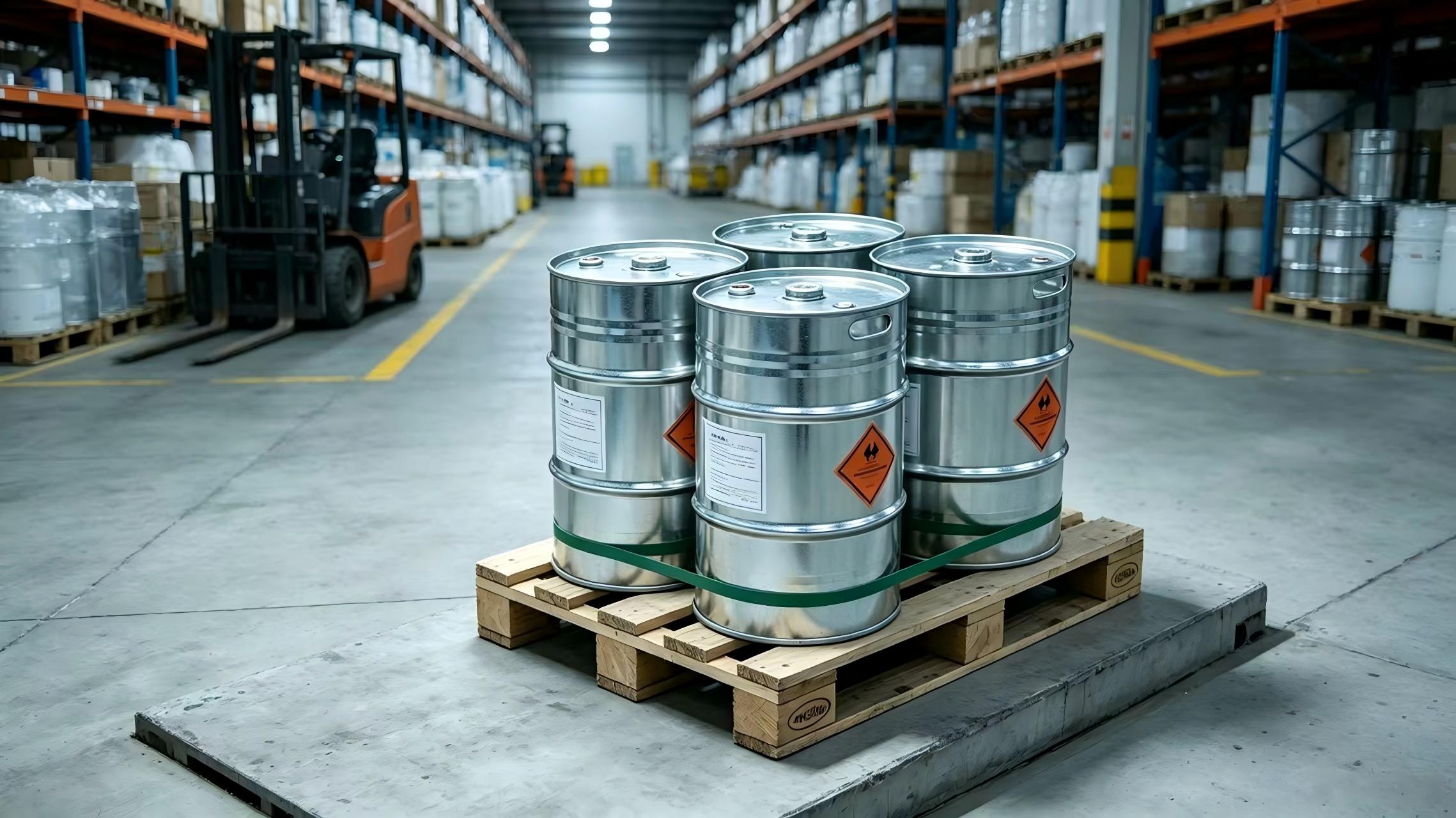
For sea freight DMC is classified as a flammable liquid. It is normally packed in 210-litre UN-certified steel drums, four drums to a pallet, secured with horizontal strapping. The packaging complies with the IMDG Code and UN packaging standards, and shipments leave with GHS hazard labelling and a complete document set for customs inspection in the destination country.
What Buyers Check
- Purity grade — industrial or battery grade, matched to the process rather than to price alone.
- Water content — the decisive figure for electrolyte use, where moisture limits cycle life.
- Batch-to-batch consistency — repeat production depends on the next delivery behaving like the last one.
A range of purity specifications is available to suit different applications, and we support both small trial orders and full-container bulk shipments. Send us the grade, quantity and destination port and we will come back with a quotation, a packaging suggestion and a realistic shipment date.