
Ethylene Glycol Monobutyl Ether (EB)
A dual-affinity mid-to-high boiling glycol ether with built-in anti-blushing performance — compatible with both water and oil, with outstanding slow-drying levelling.
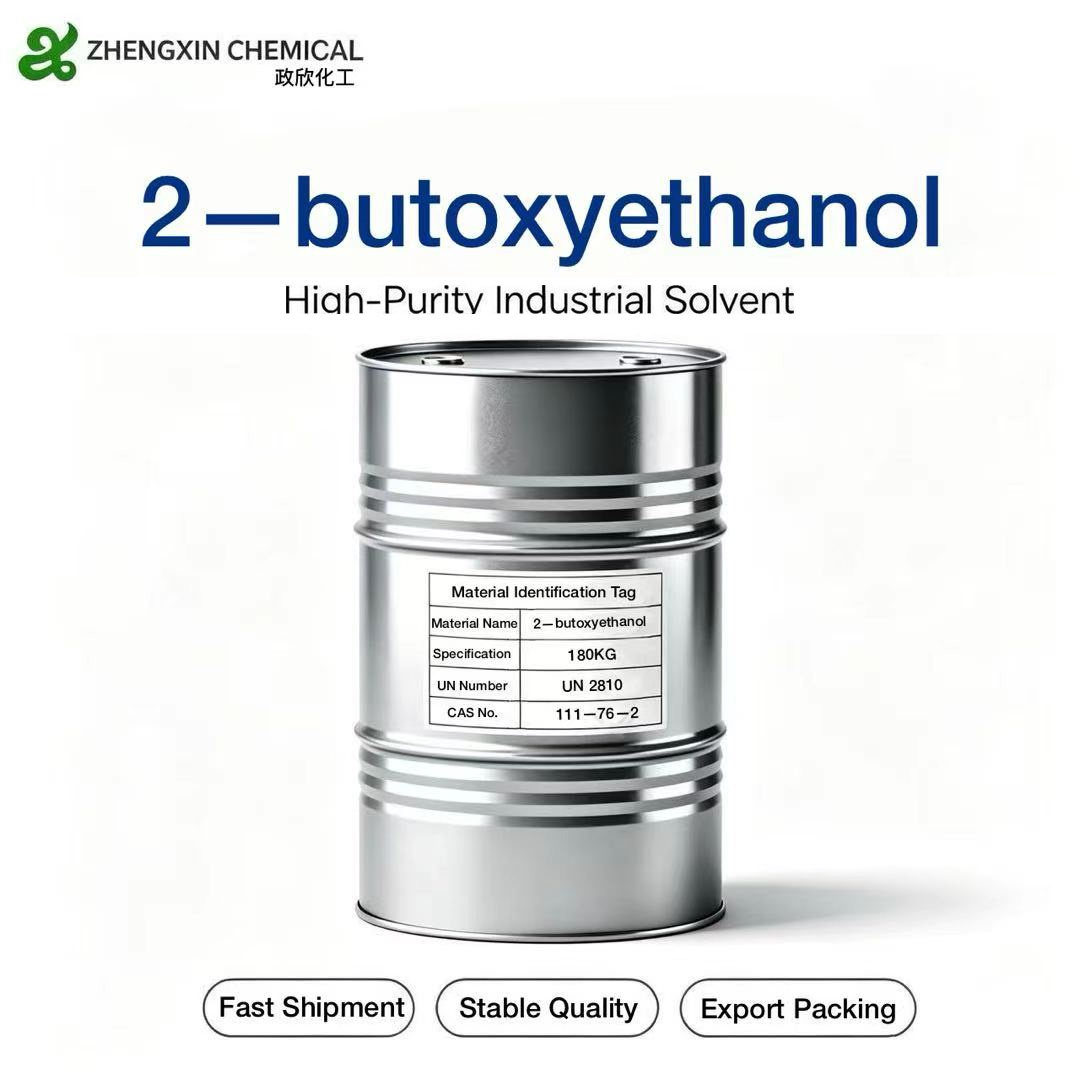
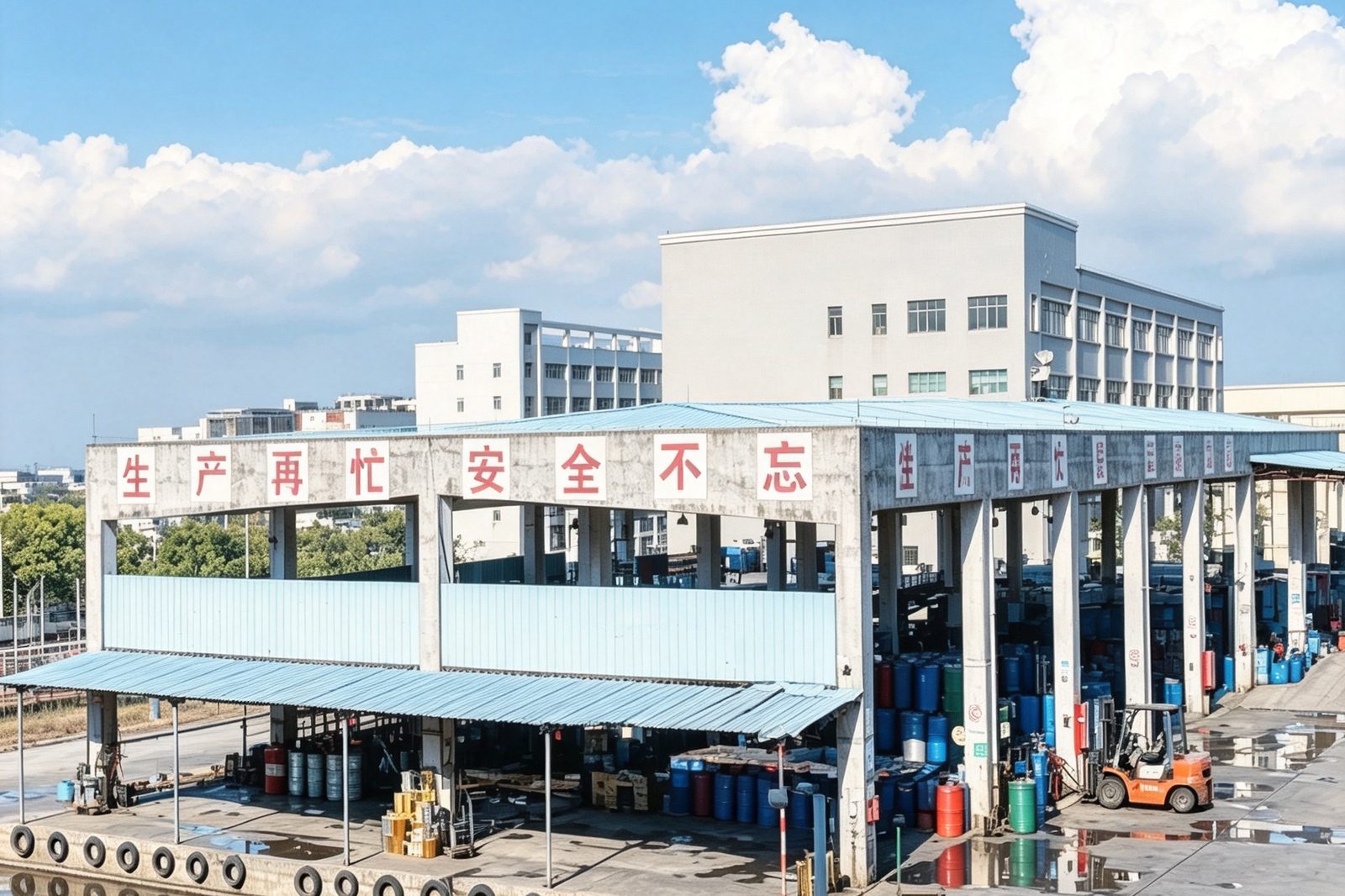
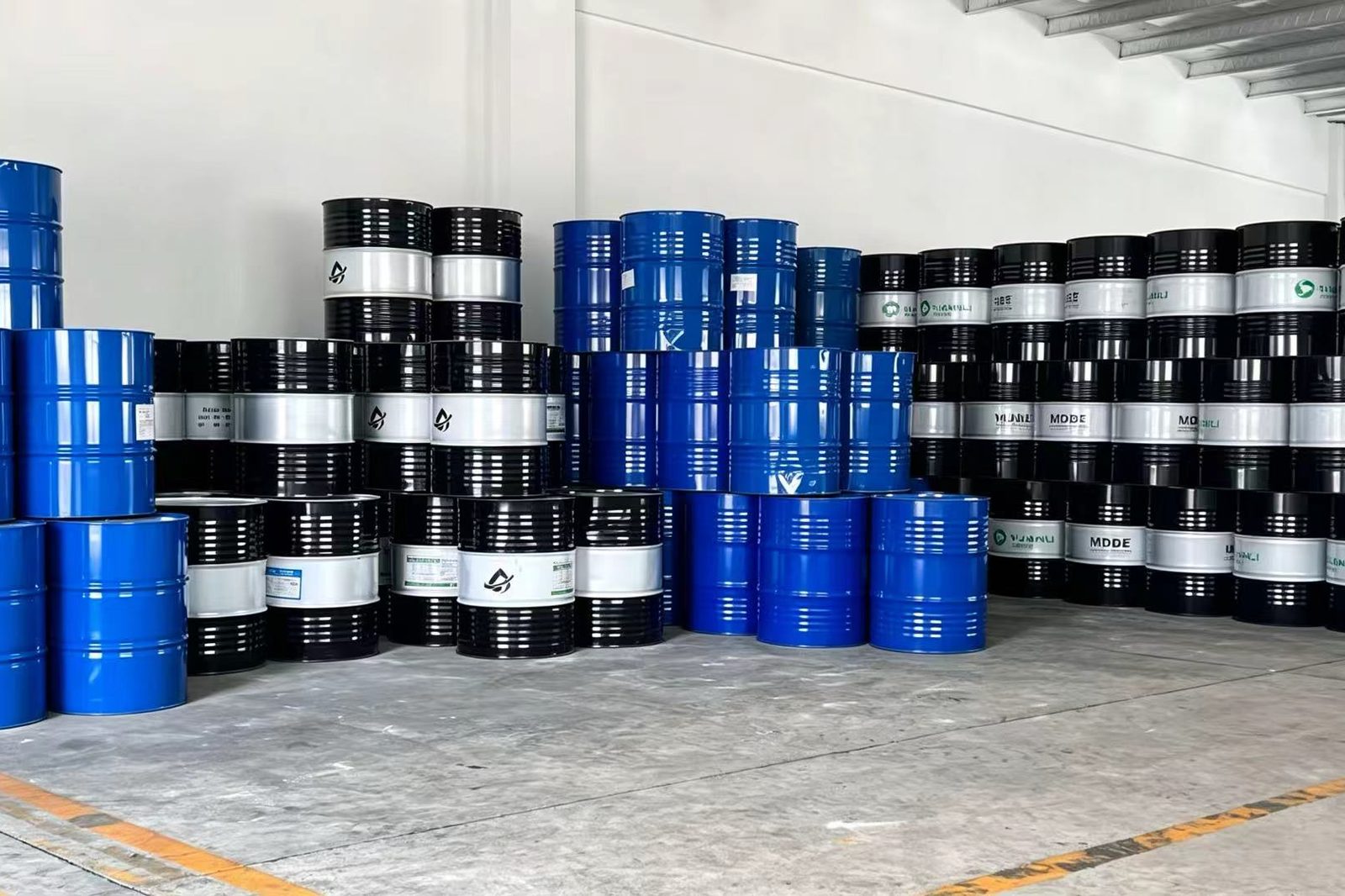
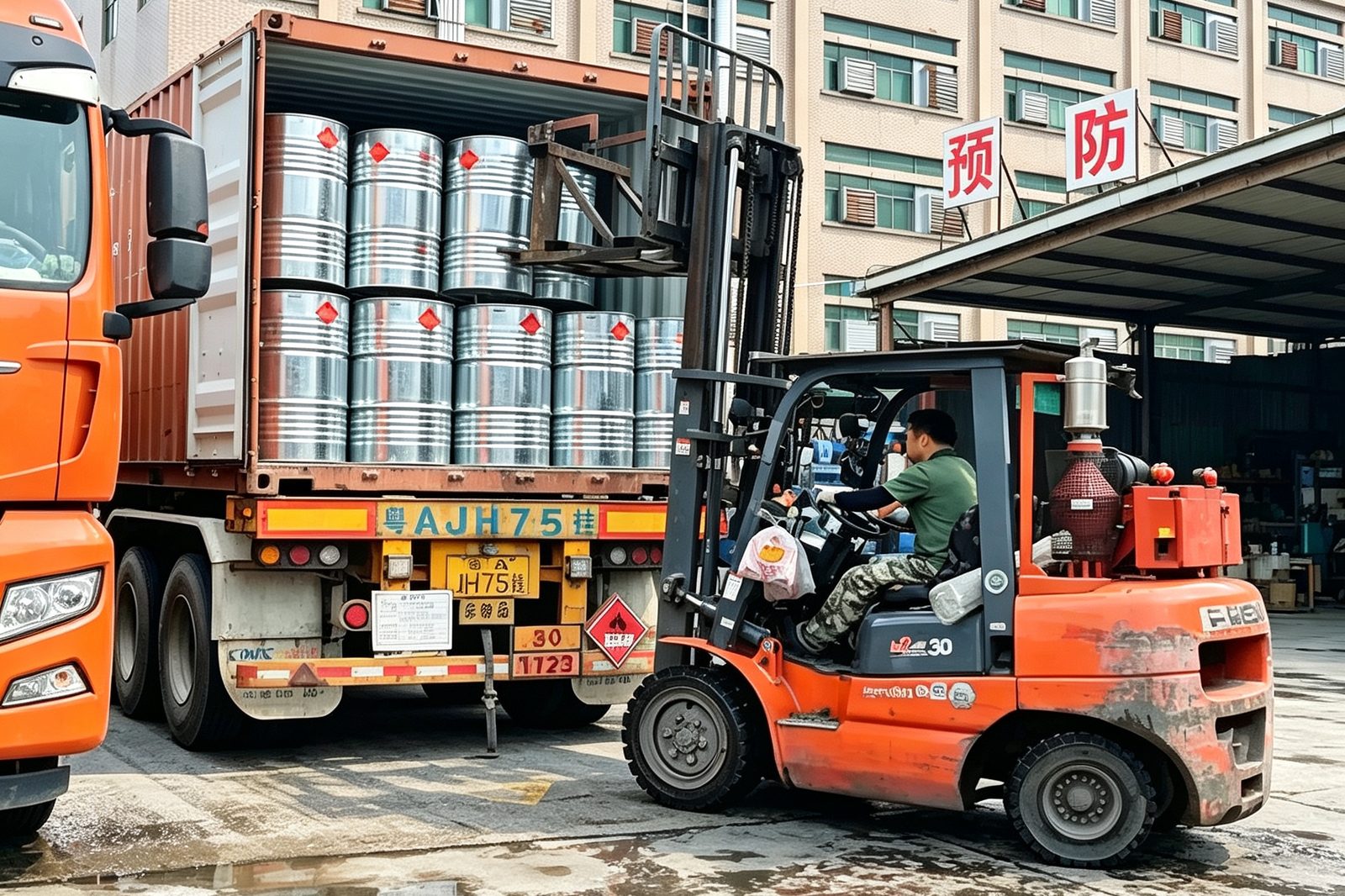
Product photo plus packaging, storage and loading conditions at our Dongguan facility.
At a Glance
| CAS No. | 111-76-2 |
| Chemical Name | Ethylene glycol monobutyl ether (2-butoxyethanol, butyl glycol, EB) |
| Molecular Formula | C6H14O2 |
| Purity | 100% |
| Origin | China |
| Packaging | 210 L steel drum (180 kg) / IBC / ISO tank container / small drum |
| Lead Time | 15–20 working days after deposit |
Product Overview
Ethylene glycol monobutyl ether — known in the trade as butyl glycol and widely used as an anti-blushing solvent — is made by addition of ethylene oxide to n-butanol and purified by multi-stage vacuum distillation that removes light ends and residual alcohol. Purity and evaporation rate are stable and controllable from batch to batch. The molecule combines a hydrophilic hydroxyl group with a lipophilic butyl ether group, so it is miscible in any ratio with water, resins and oils. Its headline benefit is absorbing moisture in humid spray environments, eliminating film blushing and hazing, while gentle evaporation gives a wide film-forming window that lifts gloss and adhesion.
Global waterborne coatings and environmentally friendly inks continue to expand capacity, and the need for anti-blushing performance in humid conditions stays firm; metal and electronics precision cleaning and waterborne adhesives are clear growth segments, as low-VOC policies push glycol ethers to replace aromatic diluents. Spent solvent can be recovered by distillation, keeping the overall cost of use under control. Storage requires segregation from strong acids and strong oxidisers; a sealed, ventilated, explosion-proof warehouse allows long-term storage.
Key Advantages
Purpose-Built Anti-Blushing Performance for Humid Conditions
Its unique moisture-scavenging ability prevents hazing and pinholes when spraying on rainy days or in humid workshops, cutting coating rework losses.
Water and Oil Compatibility for Any Formulation
One solvent dissolves nitrocellulose, acrylic, alkyd and PU resins and works in both waterborne and solventborne coatings, simplifying co-solvent blending.
Medium-Slow Even Evaporation, Full and Durable Films
A moderate boiling point gives ample levelling time, producing a dense, high-gloss film and improving the ageing resistance of outdoor anti-corrosion coatings.
Powerful Cleaning That Lifts Heavy Oil Soil Fast
Strong penetration dissolves stamping oils, flux residue and old coatings quickly, leaving no oily film behind after cleaning.
Applications
Ethylene glycol monobutyl ether covers six distinct industrial segments: industrial baking coatings and screen inks, metal and electronics precision cleaning, waterborne laminating adhesives, agrochemical EC aids, textile dye penetrants and fine organic synthesis.
- Industrial baking coatings and screen inks — a dedicated anti-blushing slow-drying solvent for wood lacquers, metal anti-corrosion paints and plastic screen inks that prevents hazing in humid conditions and improves gloss and adhesion.
- Metal and electronics precision cleaning — a cleaner for stampings, PCB boards, mould heavy oil soil and flux residue that does not corrode or leave residue on the substrate.
- Waterborne laminating adhesives — a coupling aid for waterborne PU and acrylic adhesives that extends open time and bonds firmly without hazing or separation.
- Agrochemical EC carriers — a co-solvent for herbicides and insecticides that improves the dispersion stability of the technical material in water and gives even field coverage.
Technical Specifications
| Appearance | Colourless transparent liquid |
| Purity | 100% |
| Molecular Formula | C6H14O2 |
| CAS No. | 111-76-2 |
| EINECS No. | 203-905-0 |
| Relative Density (water = 1) | 0.90 |
| Flash Point | 67 °C |
| Boiling Point | 171 °C |
| Hazard Classification | Class 6.1 toxic liquid |
| Stability | Stable when sealed at ambient temperature; avoid prolonged contact with strong acids and strong oxidisers |
| Solubility | Infinitely miscible with water; compatible with alcohols, ketones, esters, aromatics and synthetic resins |
| Storage | Store in a cool, ventilated, explosion-proof hazardous goods warehouse at ≤37 °C with containers sealed throughout. Keep separate from acids, alkalis and oxidisers, with spark-free tools and sand or absorbent spill containment available. |
Composition
| Component | Concentration | CAS No. |
|---|---|---|
| 2-Butoxyethanol | 100% | 111-76-2 |
Transport & Compliance
| UN No. | UN2810 |
| Hazard Class | Class 6.1 toxic liquid |
| Packing Group | I |
| HS Code | 2909430000 |
| Packaging | 180 kg per drum (210 L steel drum) |
UN and HS codes are shown for reference only — please confirm with us before shipment.
FAQ
What is your minimum order quantity?
Our MOQ is one 20GP container — up to 80 drums of 210 L.
What packaging do you offer?
Standard 210 L steel drums, plus IBC totes, ISO tank containers and small drums.
How many drums fit in a 20GP or 40GP, and can you consolidate?
Yes, we consolidate up to 5 product types in one shipment. A 20GP holds up to 80 drums (210 L); a 40GP holds around 130 drums (210 L).
What is the lead time?
15–20 working days after the deposit is received.
Which export documents do you provide?
COA, MSDS, commodity inspection certificate and dangerous goods packaging certificate. We can also assist with Certificate of Origin and other customs paperwork.
What payment terms do you accept?
T/T: 30% deposit, 70% balance against a copy of the Bill of Lading.
Technical Documents
MSDS and batch COA for Ethylene Glycol Monobutyl Ether (EB) are available on request. Tell us your quantity and destination port and we will send the documents with your quotation. Request documents →
Request a Quote for Ethylene Glycol Monobutyl Ether (EB)
Send the quantity and the destination port and we will reply with a price, a packaging suggestion and a realistic shipment date. All fields marked * are required.