
n-Butanol
A straight-chain primary alcohol with a medium evaporation rate that works as a general-purpose industrial solvent and as a core intermediate for ester synthesis, covering acrylate production, industrial coatings and inks, plasticisers, pharmaceutical extraction, agrochemical formulations and household and fragrance applications.
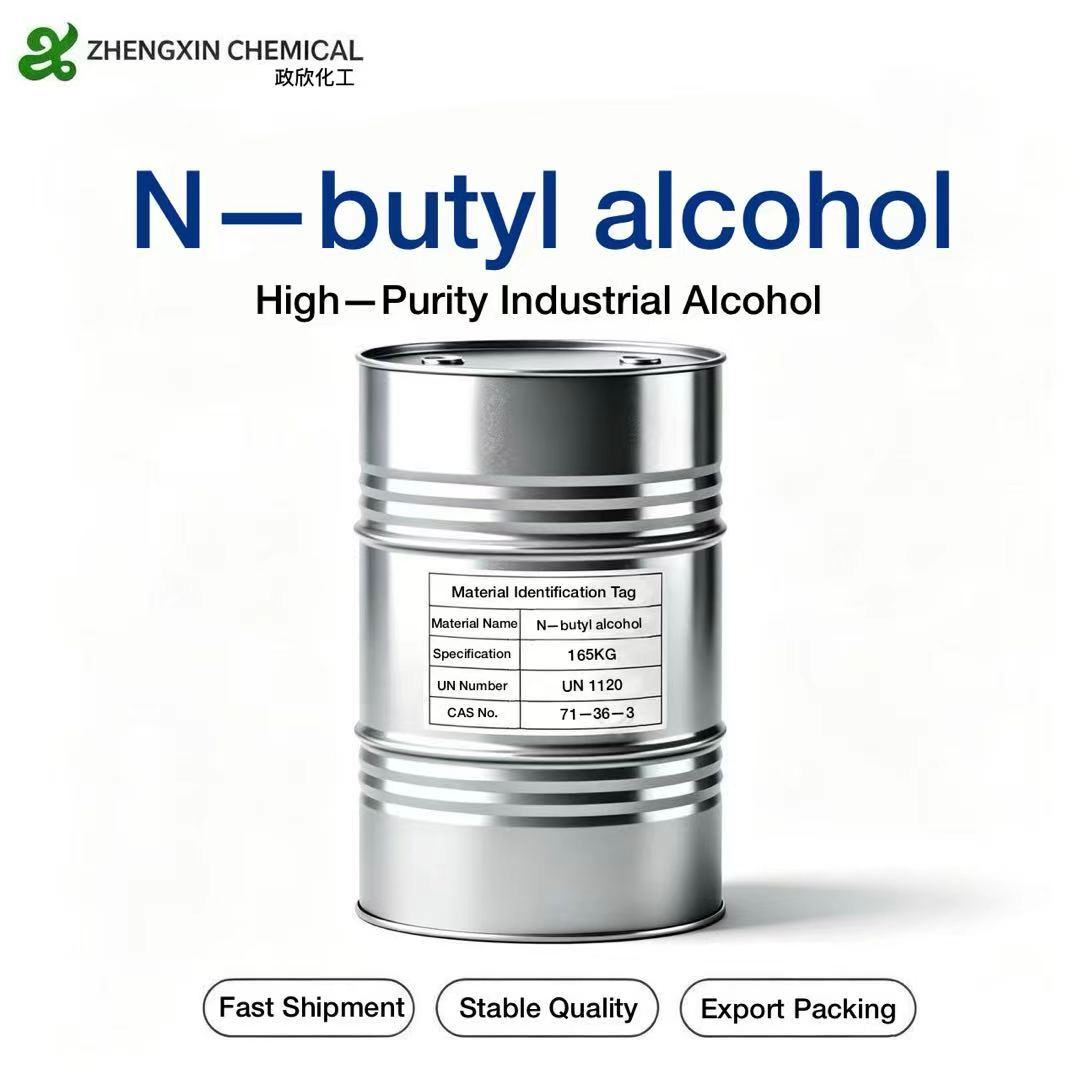
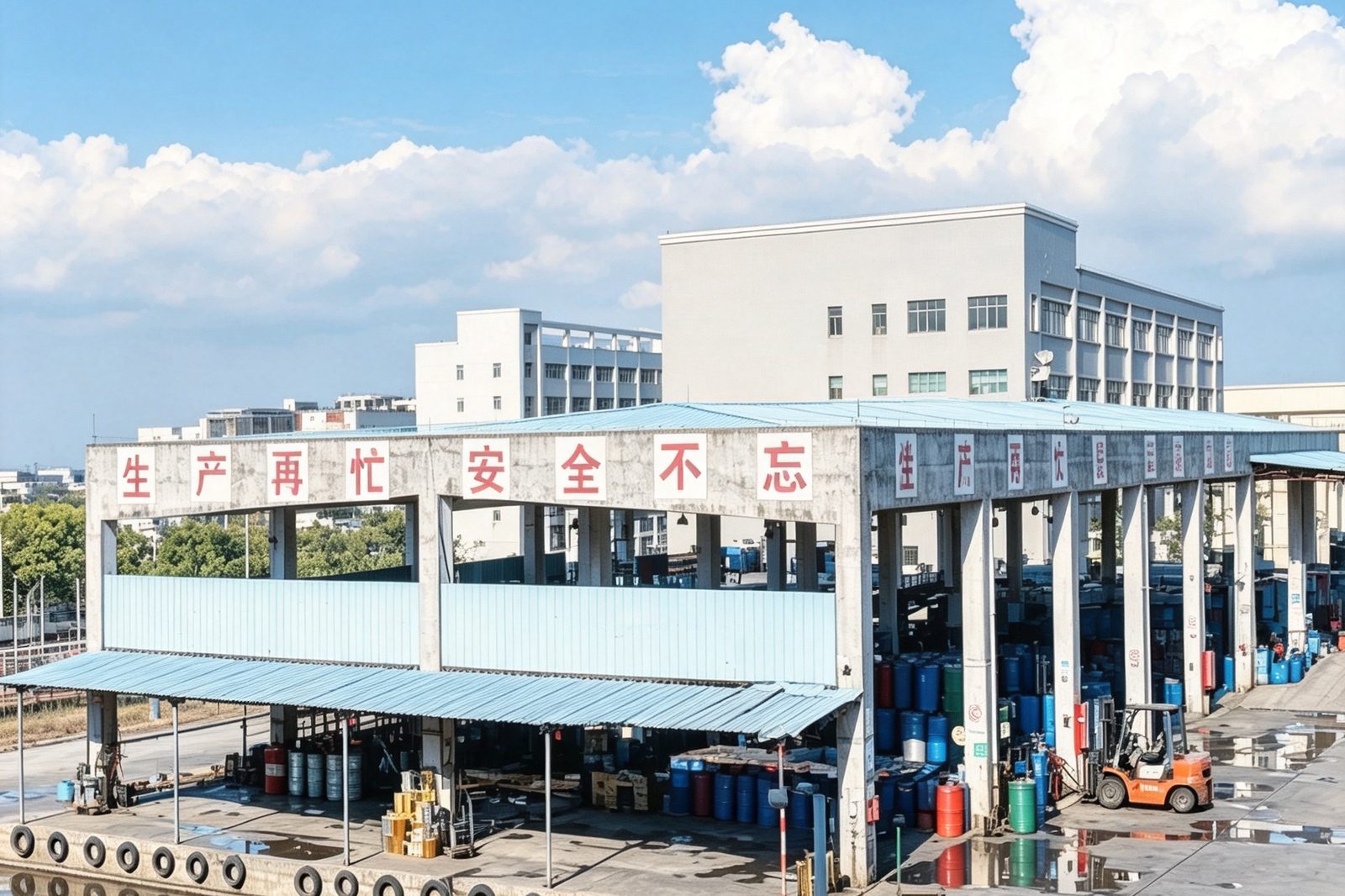
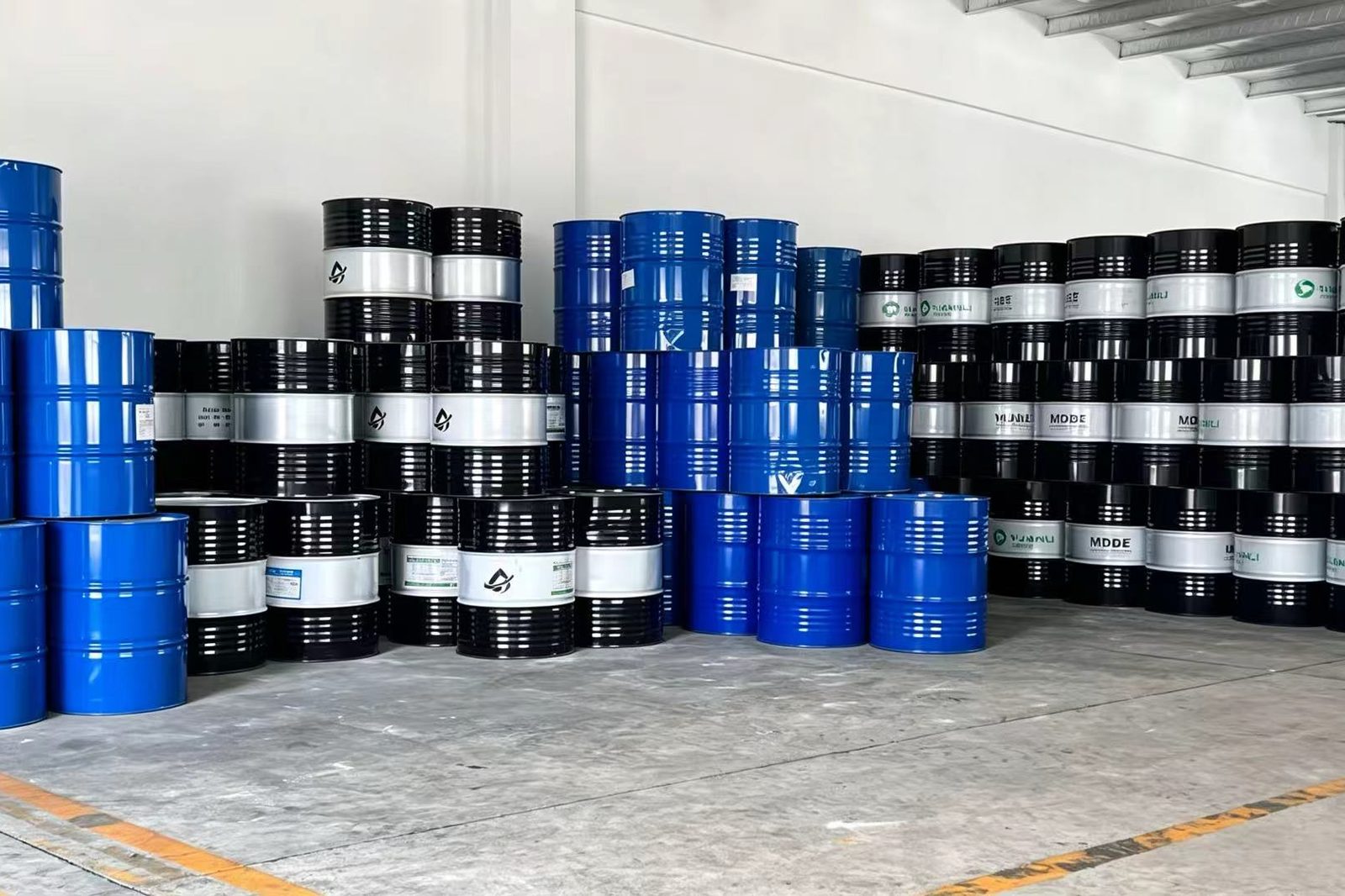
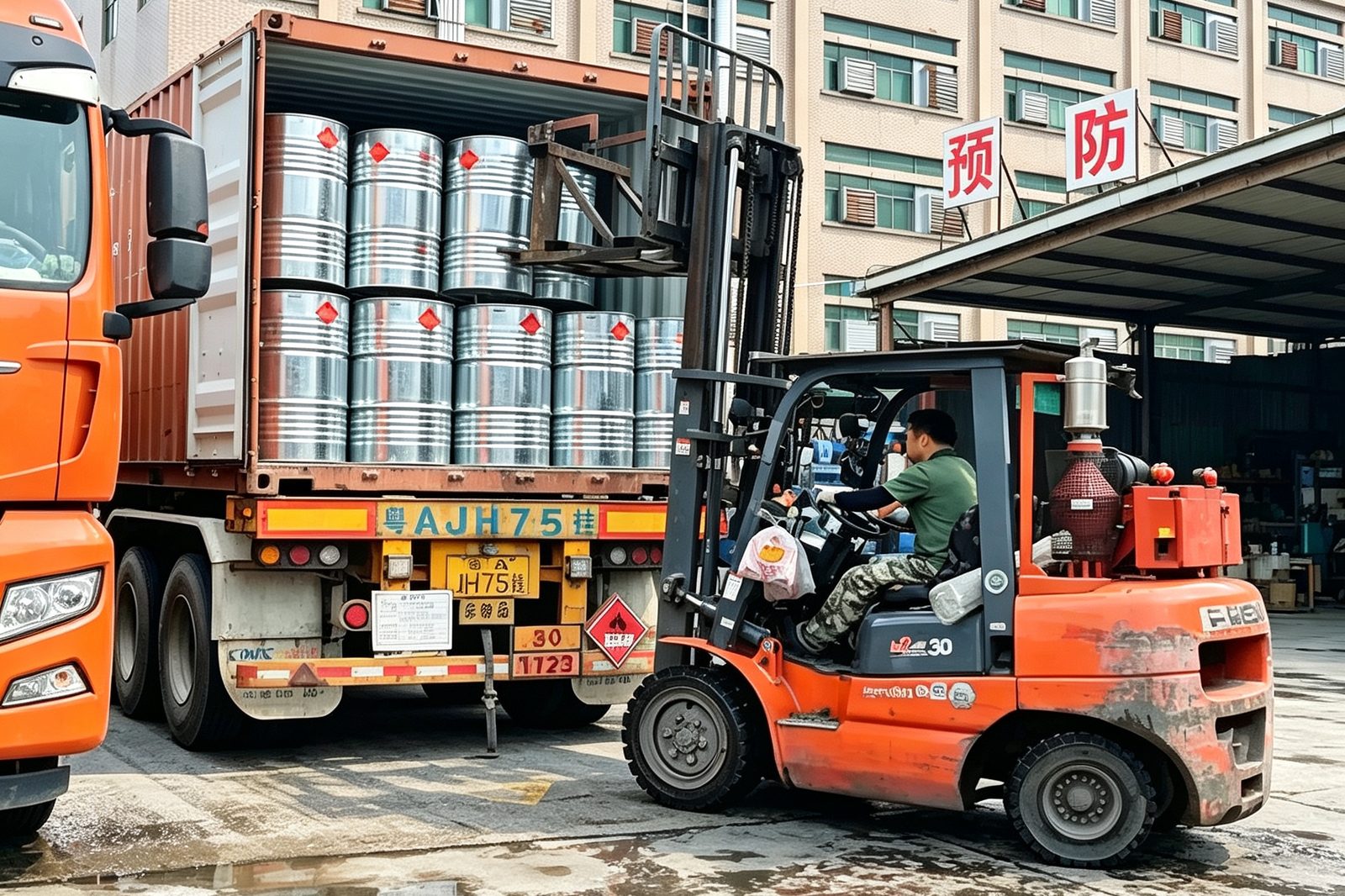
Product photo plus packaging, storage and loading conditions at our Dongguan facility.
At a Glance
| CAS No. | 71-36-3 |
| Chemical Name | Butan-1-ol (n-butyl alcohol, 1-butanol, n-butanol) |
| Molecular Formula | C4H10O |
| Purity | ≥99.5% |
| Origin | China |
| Packaging | 165 kg per drum (210 L steel drum) / IBC / ISO tank / small drum |
| Lead Time | About 60 working days after deposit |
Product Overview
n-Butanol — also called 1-butanol or n-butyl alcohol — is produced by the mature propylene carbonylation route and refined through multi-stage continuous distillation that removes water, isobutanol and light ends. Purity is held at ≥99.5% with highly consistent batch acid value and evaporation rate, which suits long, continuous synthesis and coating lines. The straight-chain primary hydroxyl group gives balanced solvency and a moderate evaporation profile — no fast-drying blushing and no slow-drying tackiness — while its high esterification activity makes it the core feedstock for butyl acrylate, butyl acetate and DBP plasticiser.
Continued expansion of water-borne coatings, PVC products and active pharmaceutical ingredient capacity worldwide keeps n-butanol in firm structural demand. As VOC controls tighten, its lower irritation than aromatic solvents and its easy distillative recovery make it the better environmental fit. Butyl acrylate, which accounts for more than half of downstream consumption and is the backbone of emulsions and adhesives, keeps the market base solid.
Key Advantages
One Product, Two Payoffs: Solvent and Synthesis Intermediate
It works as a dilution and cleaning medium for coatings and inks and as the core feedstock for butyl acrylate and plasticisers, covering several downstream lines from a single purchase item and simplifying inventory.
Balanced Evaporation, Fewer Coating Defects
The medium boiling point and gradual evaporation leave ample flow and levelling time in spray applications, giving even gloss without blushing, pinholes or orange peel.
High Purity, Low Impurities, Consistent Esterification Yield
Trace isobutanol and moisture are tightly controlled, so side reactions during esterification are minimal and the resulting butyl esters and plasticisers meet the colour specification for high-end emulsions and plastics.
Wide Solvency Range, Strong Resin Compatibility
Balanced dissolving power for nitrocellulose, alkyd, acrylic and cellulosic resins means thinner blends no longer need several auxiliary co-solvents.
Applications
n-Butanol serves six distinct industrial sectors: acrylate synthesis, industrial coatings and inks, plastics plasticisers, pharmaceutical fine extraction, agrochemical formulations, and household and fragrance applications.
- Butyl acrylate feedstock — used to synthesise water-borne architectural coatings, wood emulsions, textile printing adhesives and water-borne pressure-sensitive adhesives; the largest downstream outlet.
- Industrial coatings and printing inks — a dedicated thinner for nitrocellulose, alkyd and plastic screen inks that adjusts drying speed and improves film adhesion.
- Plasticiser production — the feedstock for dibutyl phthalate (DBP), used to soften PVC film, artificial leather and hose.
- Pharmaceutical fine chemicals — a low-temperature extraction solvent for antibiotics and vitamin APIs that gently isolates active ingredients with high purified yield.
Technical Specifications
| Appearance | Colourless transparent liquid with a clean, characteristic alcohol odour |
| Purity (%) | ≥99.5 |
| Molecular Formula | C4H10O |
| CAS No. | 71-36-3 |
| EINECS No. | 200-928-5 |
| Relative Density (water = 1) | 0.81 |
| Flash Point | 29 °C |
| Boiling Point | 117.7 °C |
| Hazard Classification | Class 3 flammable liquid |
| Stability | Stable at ambient temperature in sealed containers; contact with strong acids or strong oxidisers can generate heat and cause a dangerous reaction |
| Solubility | Slightly soluble in water; miscible with alcohols, ketones, esters, aromatics and oils |
| Storage | Store in a cool, ventilated dedicated hazardous goods warehouse at 37 °C or below with containers kept fully sealed. Segregate from oxidisers and strong acids. The area requires explosion-proof lighting, spark-free handling tools and sand or earth for spill containment. |
Composition
| Component | Concentration | CAS No. |
|---|---|---|
| Butanol | ≥99.5% | 71-36-3 |
Transport & Compliance
| UN No. | UN1120 |
| Hazard Class | Class 3 flammable liquid |
| Packing Group | III / II |
| HS Code | 2905130000 |
| Packaging | 165 kg per drum (210 L steel drum) |
UN and HS codes are shown for reference only — please confirm with us before shipment.
FAQ
What is your minimum order quantity?
Our MOQ is one 20GP container — up to 80 drums of 210 L.
What packaging do you offer?
Standard 210 L steel drums, plus IBC totes, ISO tank containers and small drums.
How many drums fit in a 20GP or 40GP, and can you consolidate?
Yes, we consolidate up to 5 product types in one shipment. A 20GP holds up to 80 drums (210 L); a 40GP holds around 130 drums (210 L).
What is the lead time?
About 60 working days after the deposit is received.
Which export documents do you provide?
COA, MSDS, commodity inspection certificate and dangerous goods packaging certificate. We can also assist with Certificate of Origin and other customs paperwork.
What payment terms do you accept?
T/T: 30% deposit, 70% balance against a copy of the Bill of Lading.
Technical Documents
MSDS and batch COA for n-Butanol are available on request. Tell us your quantity and destination port and we will send the documents with your quotation. Request documents →
Request a Quote for n-Butanol
Send the quantity and the destination port and we will reply with a price, a packaging suggestion and a realistic shipment date. All fields marked * are required.