Propylene Glycol Methyl Ether (PM)
A low-toxicity amphiphilic glycol ether solvent that couples water and oil systems with a balanced evaporation profile.
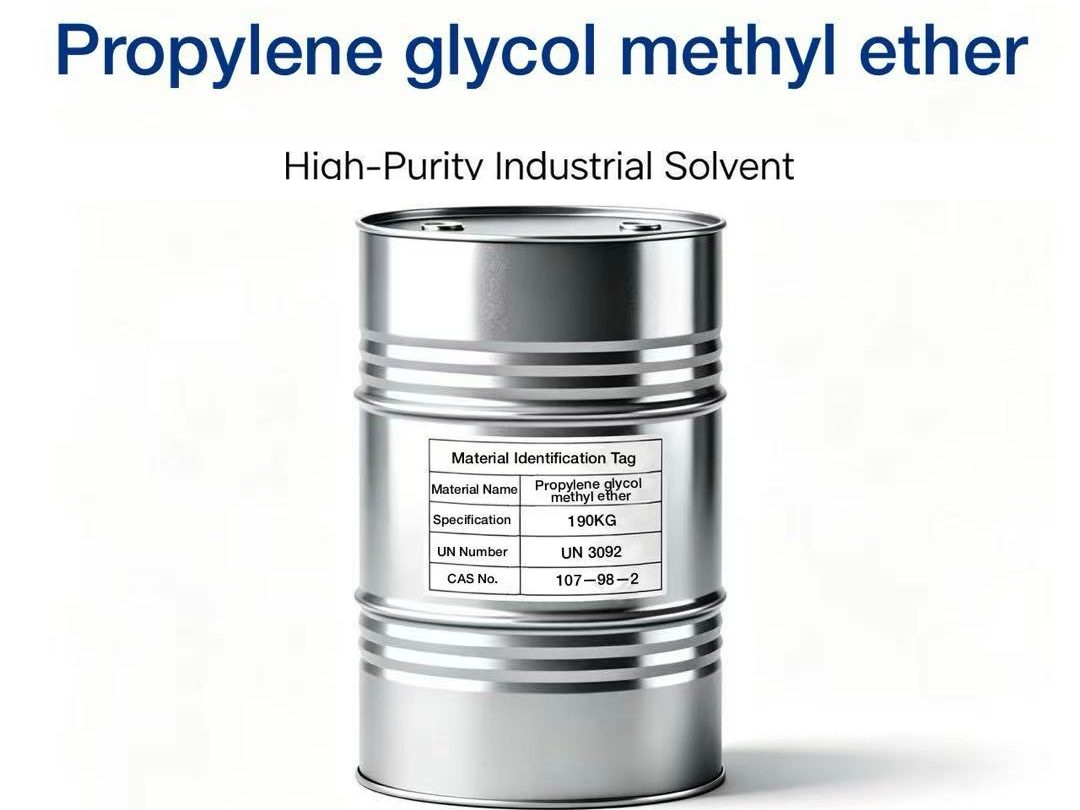
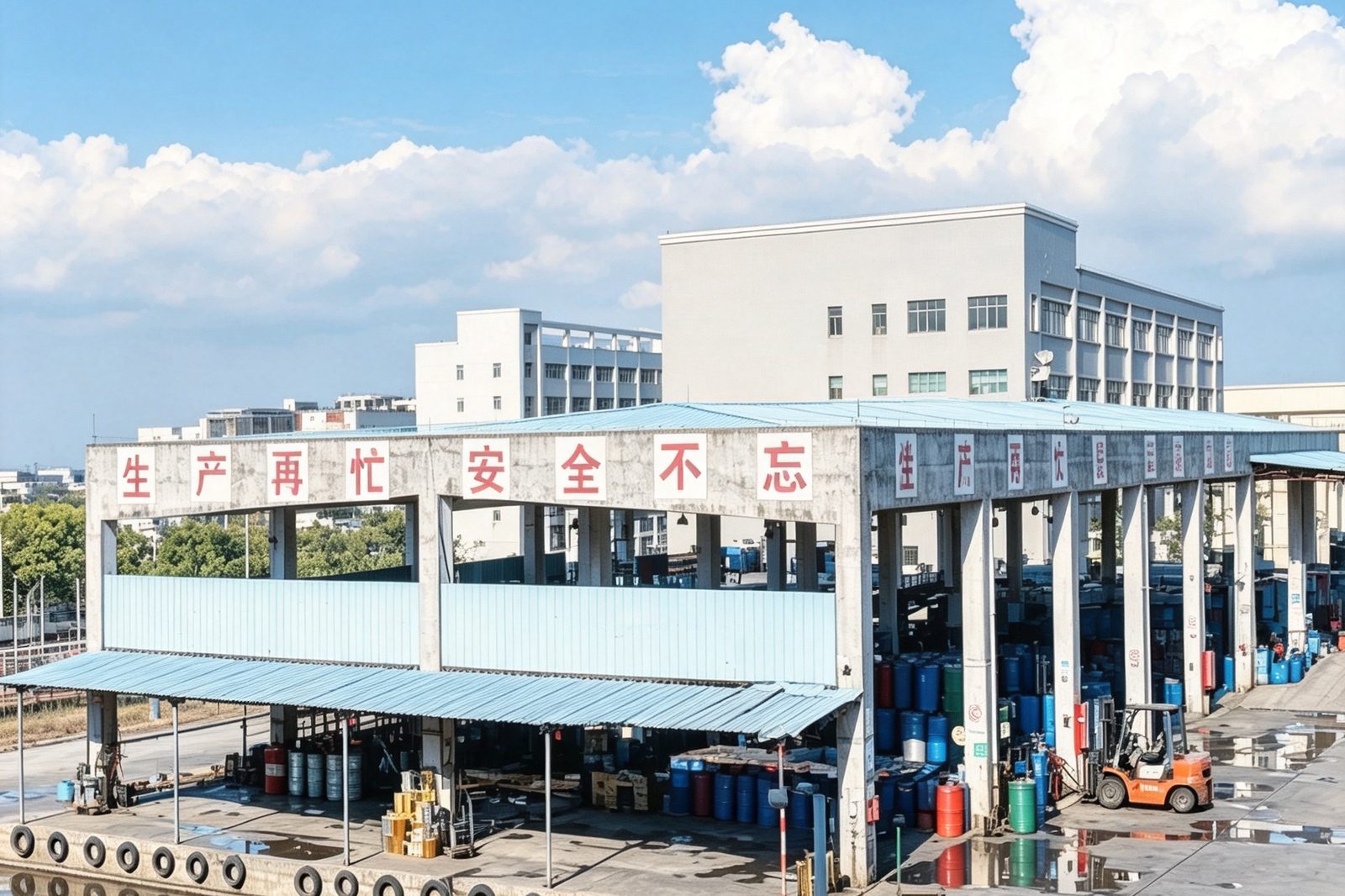
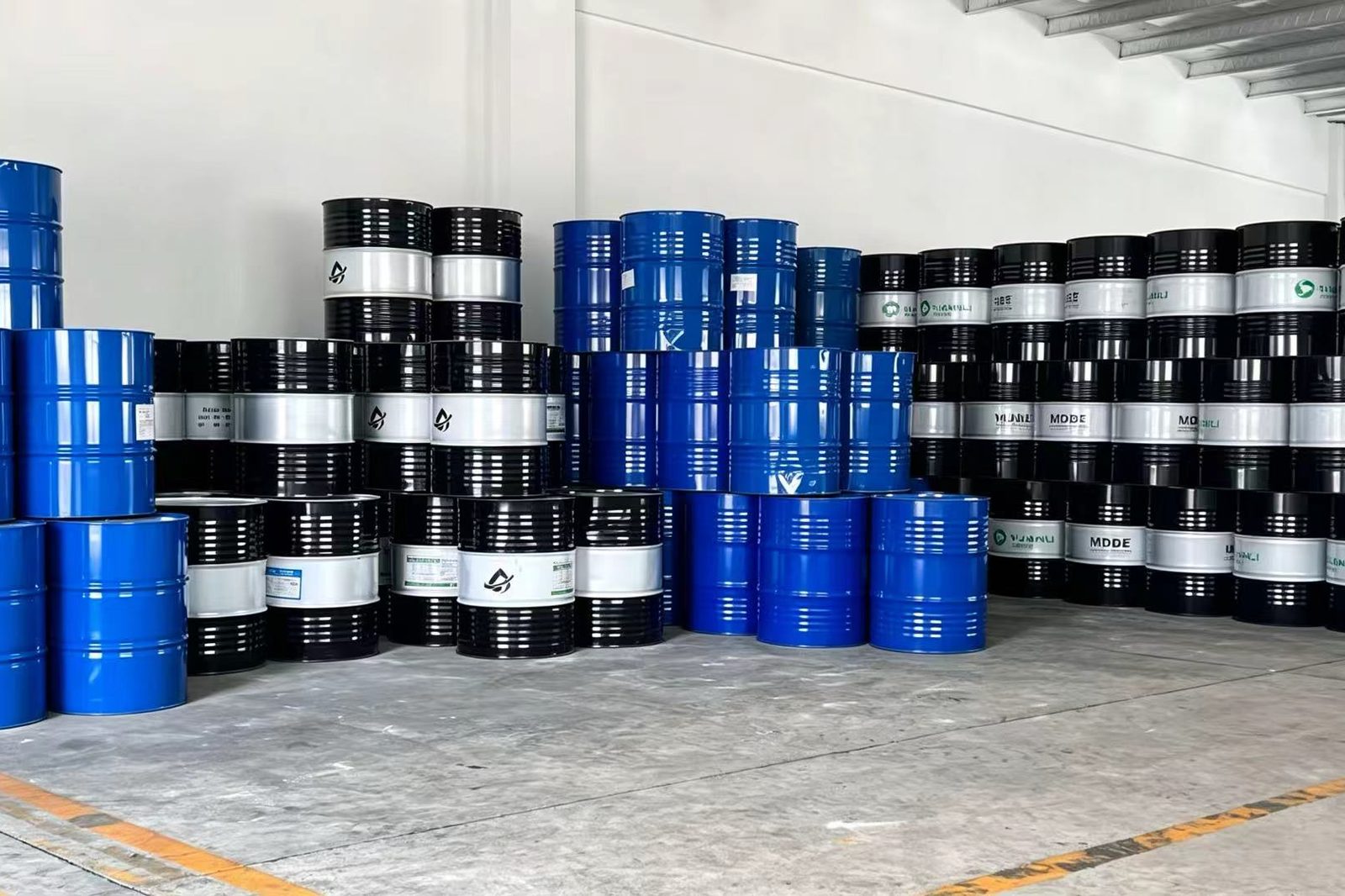
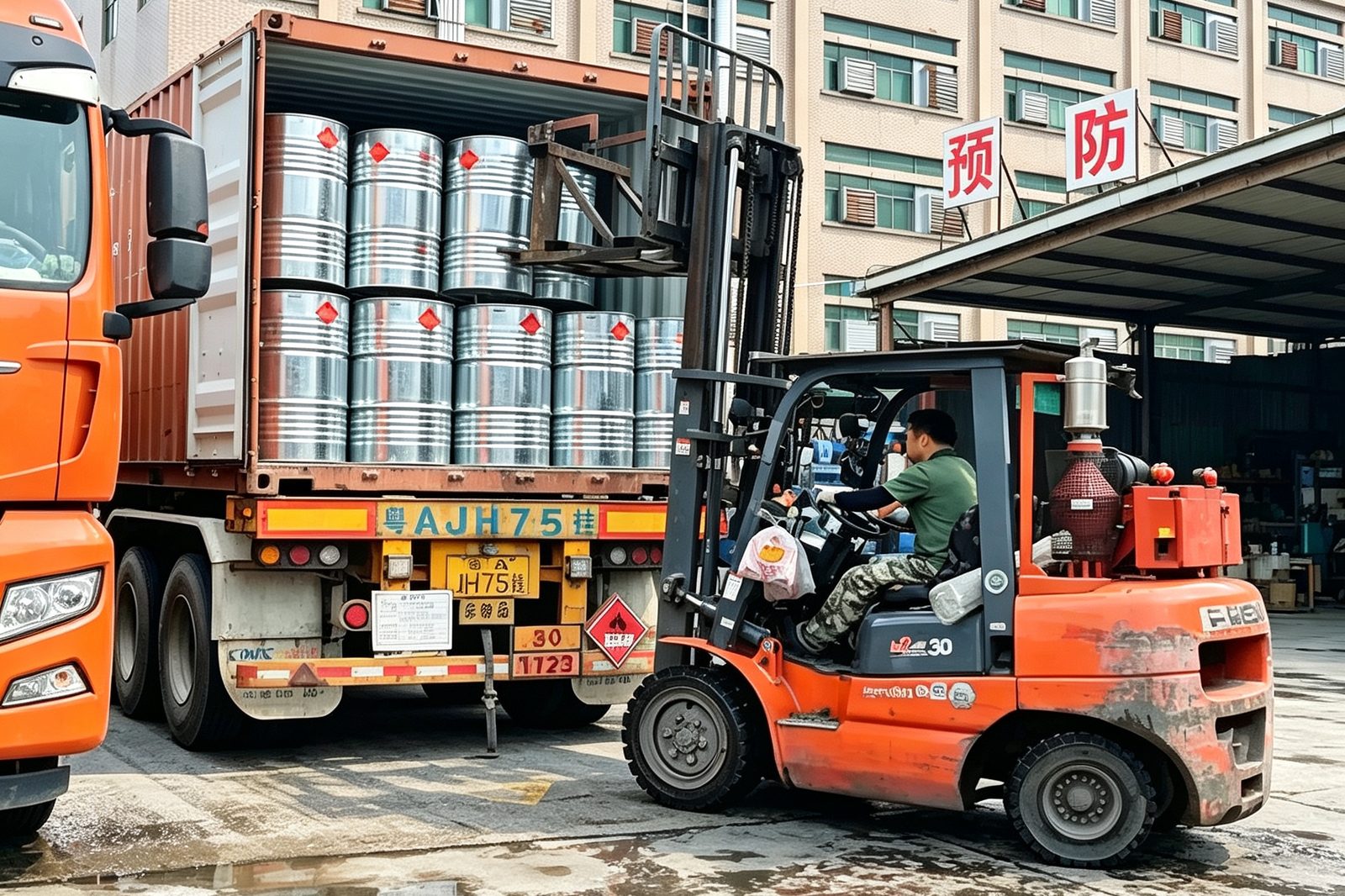
Product photo plus packaging, storage and loading conditions at our Dongguan facility.
At a Glance
| CAS No. | 107-98-2 |
| Chemical Name | Propylene glycol methyl ether (PM; 1-methoxy-2-propanol) |
| Molecular Formula | C4H10O2 |
| Purity | ≥99.5% |
| Origin | China |
| Packaging | 210 L steel drum (190 kg) / IBC / ISO tank / small drum |
| Lead Time | 15–20 working days after deposit |
Product Overview
Propylene glycol methyl ether (PM) is produced by the catalytic addition of methanol to propylene oxide and purified by multi-stage precision distillation, with moisture and trace impurities tightly controlled, so distillation range and solvency are highly consistent from batch to batch. The molecule carries both a hydrophilic hydroxyl group and a lipophilic alkyl chain, making it a rare water-and-oil-compatible coupling solvent: it dilutes with pure water in any ratio while fully dissolving resins, oils and organic actives, with a moderate evaporation rate that avoids fast blushing or residual watermarking.
Environmental limits on VOC continue to take effect worldwide and high-irritation glycol ethers and aromatic solvents are increasingly restricted, so PM — with its low toxicity, low odour and easy biodegradability — has become the mainstream replacement raw material in the coatings and electronics industries. Continued capacity expansion in new-energy semiconductors and packaging printing adds further steady demand.
Key Advantages
Water and Oil Coupling Solves Formulation Separation
The amphiphilic structure works in both water-based and solvent-based systems, so coatings and cleaning formulations need no extra cosolvent — the system is simpler and trial-and-error blending costs fall.
Balanced Evaporation, Flaw-Free Finishing
Drying is neither too fast nor too slow, leaving a generous levelling window after spraying or printing and preventing pinholing, orange peel and blushing for a fuller, glossier film.
Low Toxicity and Low Odour, a Compliant Replacement
Toxicity well below glycol ethers and xylene, a more comfortable workshop environment and low-VOC finished goods that pass environmental testing in export markets.
Precision Cleaning with No Residue, Suited to Semiconductors
After cleaning PCBs, photoresist and optical components there is no ionic or oil-film residue and no corrosion of sensitive substrates, meeting the cleanliness requirements of high-end electronics production.
Applications
Propylene glycol methyl ether serves six distinct industrial routes: industrial eco-coatings, high-end printing inks, electronics and semiconductor cleaning, agrochemical formulations, personal care and fine organic synthesis.
- Industrial eco-coatings — a coalescing aid for automotive paint, baked wood lacquers and water-based architectural latex; it lowers the film-formation temperature and improves adhesion and outdoor weather resistance.
- High-end printing inks — a slow-drying solvent for food-packaging gravure and water-based screen inks; pigment dispersion stays stable with no screen blocking or colour drag at high press speeds.
- Electronics and semiconductor cleaning — a high-purity cleaning medium for PCB boards, photoresist dilution and stripping, and flux removal from chips and components in precision processes.
- Agrochemical formulations — a cosolvent for herbicide and insecticide emulsifiable concentrates; it improves dissolution and dispersion of the technical material for more even field coverage and more consistent efficacy.
Technical Specifications
| Appearance | Colourless transparent liquid |
| Purity | ≥99.5% |
| Molecular Formula | C4H10O2 |
| CAS No. | 107-98-2 |
| EINECS No. | 203-539-1 |
| Relative Density (water = 1) | 0.92 (25 °C) |
| Flash Point | 31.1 °C (CC) |
| Boiling Point | 120 °C |
| Hazard Classification | Class 3 flammable liquid |
| Stability | Stable |
| Solubility | Miscible with water; miscible with ethanol, ether, acetone and most organic solvents |
| Storage | Store in a cool, ventilated hazardous goods warehouse below 37 °C, sealed and protected from light throughout. Keep segregated from oxidisers and strong acids and bases. The area requires explosion-proof lighting, spark-free tools and sand or absorbent spill material. |
Composition
| Component | Concentration | CAS No. |
|---|---|---|
| Propylene glycol methyl ether | ≥99.5% | 107-98-2 |
Transport & Compliance
| UN No. | UN3092 |
| Hazard Class | Class 3 flammable liquid |
| Packing Group | III |
| HS Code | 2909499090 |
| Packaging | 190 kg per drum (210 L steel drum) |
UN and HS codes are shown for reference only — please confirm with us before shipment.
FAQ
What is your minimum order quantity?
Our MOQ is one 20GP container — up to 80 drums of 210 L.
What packaging do you offer?
Standard 210 L steel drums, plus IBC totes, ISO tank containers and small drums.
How many drums fit in a 20GP or 40GP, and can you consolidate?
Yes, we consolidate up to 5 product types in one shipment. A 20GP holds up to 80 drums (210 L); a 40GP holds around 130 drums (210 L).
What is the lead time?
15–20 working days after the deposit is received.
Which export documents do you provide?
COA, MSDS, commodity inspection certificate and dangerous goods packaging certificate. We can also assist with Certificate of Origin and other customs paperwork.
What payment terms do you accept?
T/T: 30% deposit, 70% balance against a copy of the Bill of Lading.
Technical Documents
MSDS and batch COA for Propylene Glycol Methyl Ether (PM) are available on request. Tell us your quantity and destination port and we will send the documents with your quotation. Request documents →
Request a Quote for Propylene Glycol Methyl Ether (PM)
Send the quantity and the destination port and we will reply with a price, a packaging suggestion and a realistic shipment date. All fields marked * are required.