High-Purity IPA for Electronics and Pharma: A Sourcing Guide
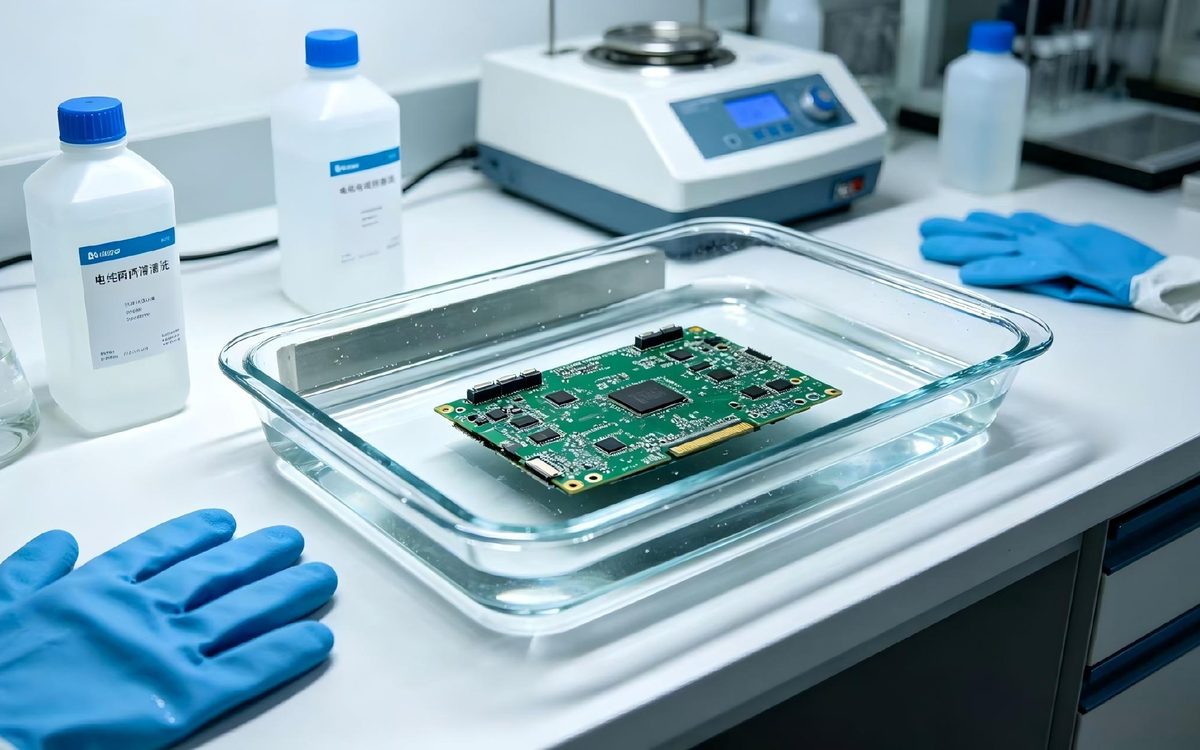
Isopropyl alcohol (CAS 67-63-0) is one of the few solvents that works equally well on a semiconductor line and in a pharmaceutical plant. It dissolves oils, greases and organic residues, mixes freely with water, evaporates at a moderate rate and dries without leaving water marks, which is why it cleans circuit boards, optical components, display parts and laboratory equipment as well as serving pharmaceutical processing and disinfection.
Where High-Purity Isopropyl Alcohol Is Used
In electronics manufacturing, isopropyl alcohol removes flux, dust and oily contamination from boards, wafers, lenses and precision assemblies. In pharmaceutical work it serves as a reaction, extraction and cleaning solvent, and in disinfection it appears in instrument products as well as hand sanitiser. The common thread is that contamination in the solvent becomes contamination in the product, so the higher the cleanliness requirement, the more the specification matters. A general industrial grade and a high-purity grade share the same chemical identity and can still behave very differently in a cleanroom or a synthesis vessel.
Five Selection Points for High-Purity Isopropyl Alcohol
- Purity grade and the specification actually held for it
- Water content, which affects electronics performance and synthesis alike
- Evaporation residue left after the solvent has flashed off
- Trace impurity control and how far it varies between batches
- Test documentation and export compliance files for repeat orders
1. Purity Grade
The grade a supplier offers should match the application rather than the price. Electronics, pharmaceutical and precision cleaning work generally calls for a high-purity specification held at 99.5% minimum, with the grade stated clearly and reproducibly on the certificate. The useful follow-up question is whether that specification is held on every batch or only on the samples submitted during qualification.
2. Water Content
Need a price for this material? Tell us the grade, the quantity and the destination port — we will reply with a quotation, a packaging suggestion and the MSDS and COA. Request a quote →
Water is not an incidental contaminant here. In electronics it can leave marks, promote corrosion or interfere with downstream processes; in pharmaceutical synthesis it can shift reaction selectivity. Moisture also creeps in during storage and transfer, so packaging and handling practice matters as much as the value printed on the analysis. Ask about both the limit and how containers are kept sealed in the warehouse and in transit.
3. Evaporation Residue and Cleanliness
A solvent can be chemically pure and still leave something behind. Non-volatile residue is what remains on a wafer, a lens or a precision part after the liquid has evaporated, and it is one of the main reasons high-purity grades exist. Ask how residue is controlled and measured, and treat reluctance to discuss it as a signal in itself.
4. Trace Impurities and Batch Consistency
Trace organic impurities, acidity and colour bodies affect yield in synthesis and cleanliness in electronic processes. Individually the values may be small; the real problem is variability, because a process validated against one impurity profile can behave differently against another. Consistent batch quality, supported by retained samples and a stable specification, protects the buyer's process controls and reduces re-validation work.
5. Test Reports and Export Documentation
For long-term purchasing, paperwork is part of the product. A batch-specific certificate of analysis, a current safety data sheet and complete export documentation determine how smoothly a shipment clears customs and how easily an incoming inspection can be closed out. A supplier experienced in hazardous goods exports can also advise on packaging and transport requirements before the booking is confirmed.
High-purity isopropyl alcohol earns its place not simply because it cleans, but because it cleans repeatedly to a defined specification. The technical parameters, packaging and transport details for our isopropyl alcohol are available on the product page.
Related Reading
Product News
Mixed Xylene in Coating and Ink Formulations: What Buyers Check
Mixed xylene does more than thin a coating: it sets resin solubility, application viscosity and the drying profile of the film. Here is how purchasing teams separate a stable supply from a variable one.
2026-07-21
Product News
Why Ethyl Acetate Dominates Coatings and Inks: A Buyer's Guide
Ethyl acetate pairs fast evaporation with strong solvency and a mild odour, which is why it sits in so many coating, ink and adhesive formulations. Buyers should judge suppliers on repeatability, not on headline purity alone.
2026-07-15
Product News
Cyclohexanone in Automotive and Anti-Corrosion Coatings: A Guide
Cyclohexanone's high boiling point and strong solvency make it a favoured co-solvent in automotive and anti-corrosion coatings. Here is how to evaluate a supplier for repeat production.
2026-06-28