
Mixed Xylene in Coating and Ink Formulations: What Buyers Check
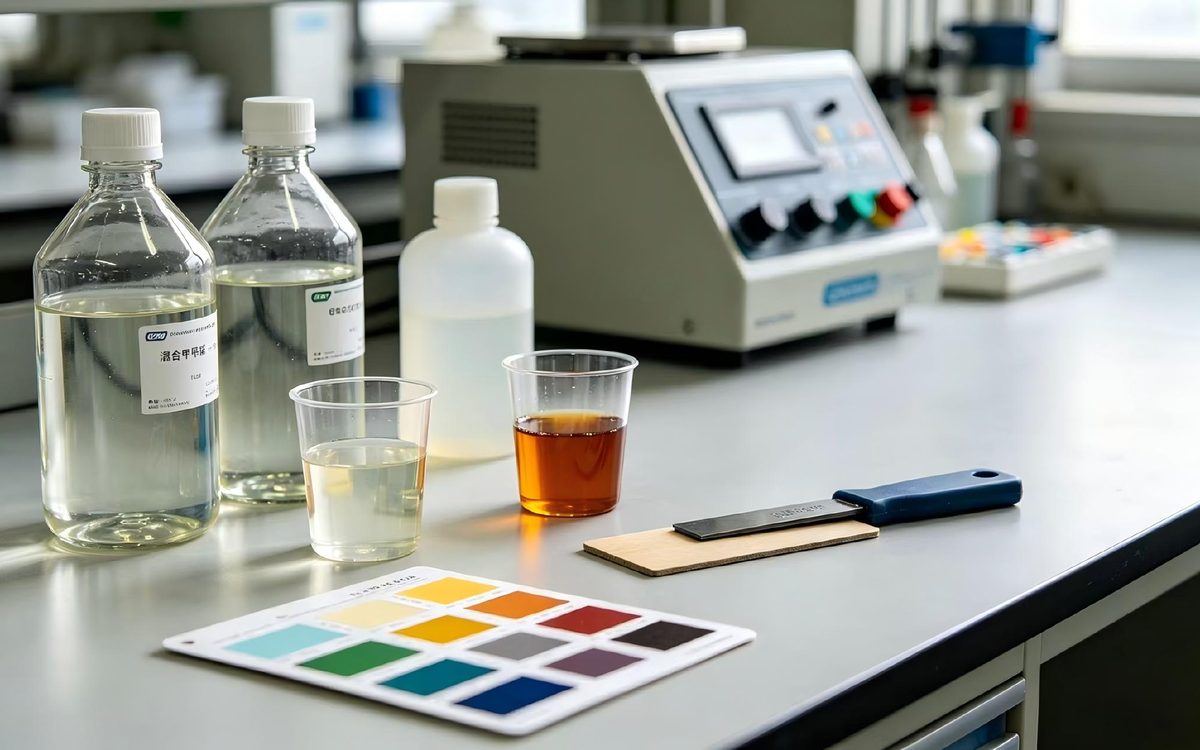
Mixed xylene (CAS 1330-20-7) is one of the workhorse aromatic solvents behind industrial coatings, printing inks, adhesives and thinners. Buyers rarely choose it for a single property: one drum has to dissolve the resin system, hold application viscosity in a workable range and still release at a predictable rate once the film is on the substrate.
What Mixed Xylene Does in a Formulation
In a coating, mixed xylene works on three stages at once. It dissolves acrylic, epoxy and amino resin systems so the binder can be handled as a liquid, lowers viscosity so the product sprays or brushes at the intended solids level, and shapes the evaporation gradient that governs levelling, sag resistance and surface flatness. Inks rely on the same behaviour to control flow and transfer. Because the product is a blend of xylene isomers and ethylbenzene rather than a single compound, the composition ratio belongs in the specification.
Five Checks That Matter Before You Place an Order
- Purity and the isomer composition ratio behind the stated grade
- Water content, which decides compatibility with polyurethane systems
- Colour, clarity and impurities as early signals of quality drift
- Batch-to-batch consistency across repeat shipments
- Export documentation and dangerous goods packaging
1. Purity and Composition Ratio
Purity drives solvency, and composition matters as much as the headline figure. The ortho, meta and para isomers and the ethylbenzene fraction behave differently in the same resin system, so two drums with the same stated purity can perform differently on the line. Ask how the ratio is controlled at blending and whether composition is reported on each certificate of analysis.
2. Water Content
Need a price for this material? Tell us the grade, the quantity and the destination port — we will reply with a quotation, a packaging suggestion and the MSDS and COA. Request a quote →
Conventional alkyd and acrylic systems tolerate a little water, but in two-component polyurethane coatings and formulations built around moisture-sensitive catalysts or pigments it shifts the reaction balance and appears as hazing, poor cure or a film that never reaches full hardness. What matters is the limit the supplier holds as standard and how consistently it is verified.
3. Colour, Clarity and Impurities
A colour shift between deliveries is often the first sign of an unstable feedstock or a blending line that is not properly cleaned. Because xylene ends up inside the finished film, elevated colour or suspended matter can pull a light coating or a high-quality print away from the approved match. Ask how colour and appearance are recorded, and whether retained samples are kept.
4. Batch-to-Batch Consistency
Solvent problems rarely arrive as one bad shipment. They arrive as slow drift: viscosity creeps, drying speed changes, and the coating behaves differently on Monday than it did the week before, forcing the formulator to re-adjust an approved process. Consistency depends on the supplier holding one specification over repeated production and blending stock to a defined target.
5. Export Documentation and Packaging
For an export buyer the risk is often logistical rather than chemical. Mixed xylene is a Class 3 flammable liquid shipped under UN1307, so the hazard class, packing group and HS code declared must line up with the destination country's requirements. A supplier who issues a safety data sheet and a batch-specific certificate of analysis and books through forwarders qualified for hazardous cargo removes most of the friction at the port. Packaging should be settled before the booking: 210 L steel drums, IBC totes and ISO tank containers suit different order sizes.
Choosing mixed xylene is therefore less about comparing two laboratory reports than about judging whether a supplier can repeat the same grade on the next container. The full specification, packaging and export data for our mixed xylene are set out on the product page.
Related Reading

Product News
Why Ethyl Acetate Dominates Coatings and Inks: A Buyer's Guide
Ethyl acetate pairs fast evaporation with strong solvency and a mild odour, which is why it sits in so many coating, ink and adhesive formulations. Buyers should judge suppliers on repeatability, not on headline purity alone.
2026-07-15
Product News
High-Purity IPA for Electronics and Pharma: A Sourcing Guide
In electronics cleaning and pharmaceutical processing the grade of isopropyl alcohol matters as much as the chemistry. These are the checks that separate a dependable high-purity supply from a variable one.
2026-07-02
Product News
Cyclohexanone in Automotive and Anti-Corrosion Coatings: A Guide
Cyclohexanone's high boiling point and strong solvency make it a favoured co-solvent in automotive and anti-corrosion coatings. Here is how to evaluate a supplier for repeat production.
2026-06-28